The Promise You Meant to Keep
Most caregivers can tell you exactly when they made the promise.
“I’ll never put you in a facility.”
“I’ll take care of you myself.”
“I won’t let this happen.”
Those words were not casual. They were spoken with love, fear, and conviction. They were said in moments when you still believed you understood what lay ahead, and when keeping that promise felt possible.
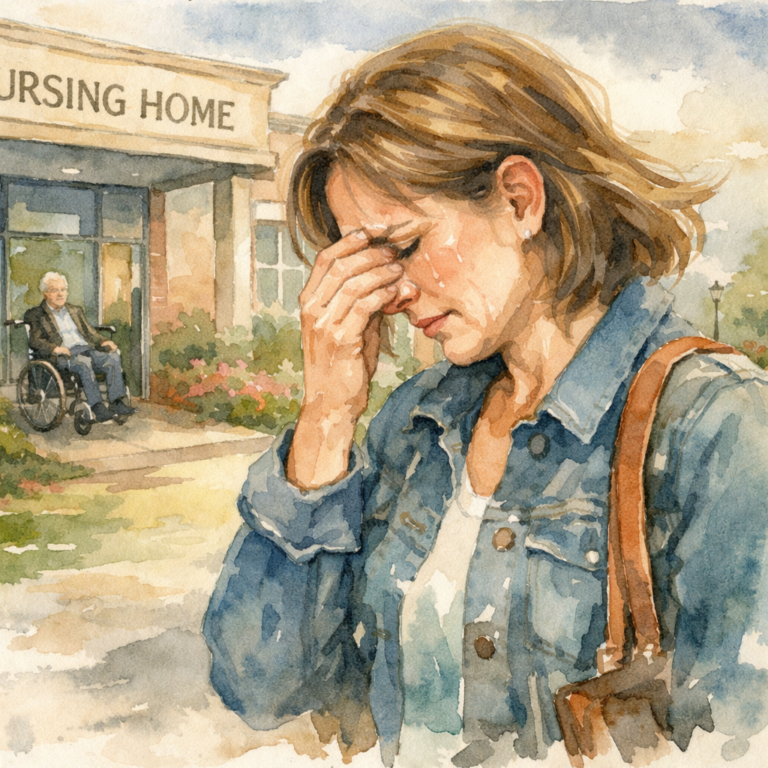
Many caregivers experience intense guilt after breaking a caregiving promise, especially after nursing home placement or moving a parent to assisted living.
It does not feel like a hard decision. It feels like a broken word. And for many caregivers, that guilt settles into a single, painful thought: I failed them.
This article does not rush to correct that feeling. It explains why it exists, and why it hurts the way it does.
Why Breaking This Promise Hurts More Than You Expected
For many caregivers, this pain is confusing because it doesn’t match what they expected to feel. You are not only grieving your loved one.
You are grieving the version of care you believed you could give.
You are grieving the promise you expected to keep.
You are grieving the future you pictured back when things felt simpler and more manageable.
This grief often goes unnamed because it does not look like traditional loss. Your loved one is still here. You are still involved. Care is still happening. And yet something important is gone.
Breaking the promise hurts because it confirms that that plan is gone.
Not postponed.
Not adjusted in your mind.
Gone.
Many caregivers describe this as the moment everything feels real in a different way. The disease progressed. The needs changed. And the story you were telling yourself about how this would go quietly ended.
That loss deserves to be acknowledged before anything else is explained.
Core Guilt: “I Broke My Word. I Failed Them.”
For many caregivers, this thought arrives suddenly and stays.
I broke my word.
I failed them.
It often shows up after placement, not before. After the decision is made. After the crisis settles. After there is finally space to feel what has been held back.
Many caregivers search for phrases like, “I promised I’d never put my mom in a nursing home,” or “Why do I feel so guilty after placement?” If that is what brought you here, you are not alone.
This guilt is not loud or dramatic. It is heavy and persistent. It sits underneath everything else and quietly reshapes how caregivers see themselves. This is a common form of caregiver guilt after placement, especially for those who once said, “I promised I’d never put them in a nursing home.” Many caregivers also begin to wonder if adjusting the plan means they abandoned their loved one, even when they remain deeply involved.
This post does not argue with that thought right away.
Instead, it explains why it appears so strongly when plans change, and why logic alone does not make it go away.
The Promise Was Made Before You Knew
Most caregivers made their promise early.
It was made before dementia advanced.
Before neurologic decline changed behavior and safety.
Before dementia progressed to wandering, incontinence, or loss of judgment. Before constant supervision became necessary.
At the time, your promise made sense. You were responding to what you could see and understand then. You were acting out of love, loyalty, and a desire to protect.
What you did not have yet was the full picture.
You could not know how the disease would progress, how long this season would last, or how much it would eventually require from one person. You did not know what would become unsafe, unsustainable, or impossible despite your best effort.
The promise was real. The intention was real.
But the information was incomplete. That gap between what you knew then and what you know now is where this guilt takes root.
That matters.
When Home Care Is No Longer Safe
Sometimes caregiver guilt after placement grows strongest when safety was already compromised. Falls, wandering, medication errors, or aggression can slowly turn home care into an unsafe environment. Recognizing when one person can no longer provide safe care is not abandonment.
The Situation Outgrew the Promise
The promise did not fail.
You did not fail.
The situation changed beyond what one person could manage safely. Often this shift follows months or years of exhaustion and burnout.
As illness progressed, the needs grew heavier. What once required commitment began to require constant supervision. What once took effort began to demand strength, vigilance, and clinical judgment around the clock. The gap between what was promised and what was possible widened slowly, often without a clear moment to mark it.
This is not a moral failure. It is a mismatch between an early plan and a later reality.
Many caregivers hold themselves to promises that no longer fit the situation in front of them. Not because they are stubborn or dishonest, but because letting go of that promise feels like letting go of who they believed they would be.
That loss is real.
Why This Guilt Doesn’t Go Away
This guilt is not resolved by logic.
You can understand the facts. You can know the care became unsafe or impossible. You can even believe the decision was necessary. And still, the guilt remains. For some caregivers, that guilt intensifies when family members or friends question the decision.
That is because this guilt is not only about care. It is about identity.
For many caregivers, the promise was tied to who they believed they were. The one who would stay. The one who would manage. The one who would not need to choose differently. When the promise breaks, it can feel like that identity breaks with it.
There is also grief underneath it. Grief for how you thought this would go. Grief for the version of the future you imagined when the promise was made. That grief does not disappear simply because a new plan is in place.
This is why reassurance often misses the mark. The pain is not coming from doubt about the decision. It is coming from mourning a plan you believed you could keep.
Hospice Reality
From a hospice nurse perspective, dementia, neurologic disease, and physical decline change what is possible. Plans that made sense early often become unsafe later. What once felt manageable can turn into constant supervision, complex medical care, and risks that one person cannot absorb alone. This shift is not sudden. It happens gradually, which makes it harder to recognize and harder to accept.
Hospice sees this pattern often. Families hold on to an early plan long after the situation has changed, not because they are careless, but because adjusting the plan feels like giving up. In reality, it is responding to what the illness now requires.
Adjusting the plan is not quitting.
It is responding to reality.
No justification is needed beyond that.
Christian Anchor: Faithfulness Is Not Rigidity
Faithfulness is not rigidity.
God works through seasons, not frozen plans. Scripture is full of people who had to adjust their path when circumstances changed, not because they lacked faith, but because reality required movement.
Holding tightly to a plan when the situation has changed is not obedience. It is fear dressed up as faith. Adaptation is not betrayal. It is discernment.
Letting go of a promise that no longer fits does not mean you stopped trusting God. It can mean you are trusting Him now, in the season you are actually living in, not the one you imagined at the beginning.
Faithfulness in caregiving is not proven by rigid plans, but by responding faithfully to the season God has placed you in.
Letting Go of the Plan You Thought You’d Keep
There is a grief that comes with admitting you cannot keep the promise the way you thought you would. Not because you stopped caring, but because the situation changed beyond what you could hold.
That loss deserves to be named.
You are allowed to grieve the plan you believed in. You are allowed to mourn the version of yourself you thought you would be in this season. Letting go of that promise does not erase the love behind it. It honors the reality that love had to respond to what was actually happening.
Some caregivers carry this guilt quietly for years after assisted living or nursing home placement, believing it is the price of choosing differently. It does not have to be. Guilt is not proof of failure. Often, it is evidence that the plan mattered deeply.
You did not quit.
You did not stop loving.
You adjusted to what the situation required.
And that, too, is a form of faithfulness.
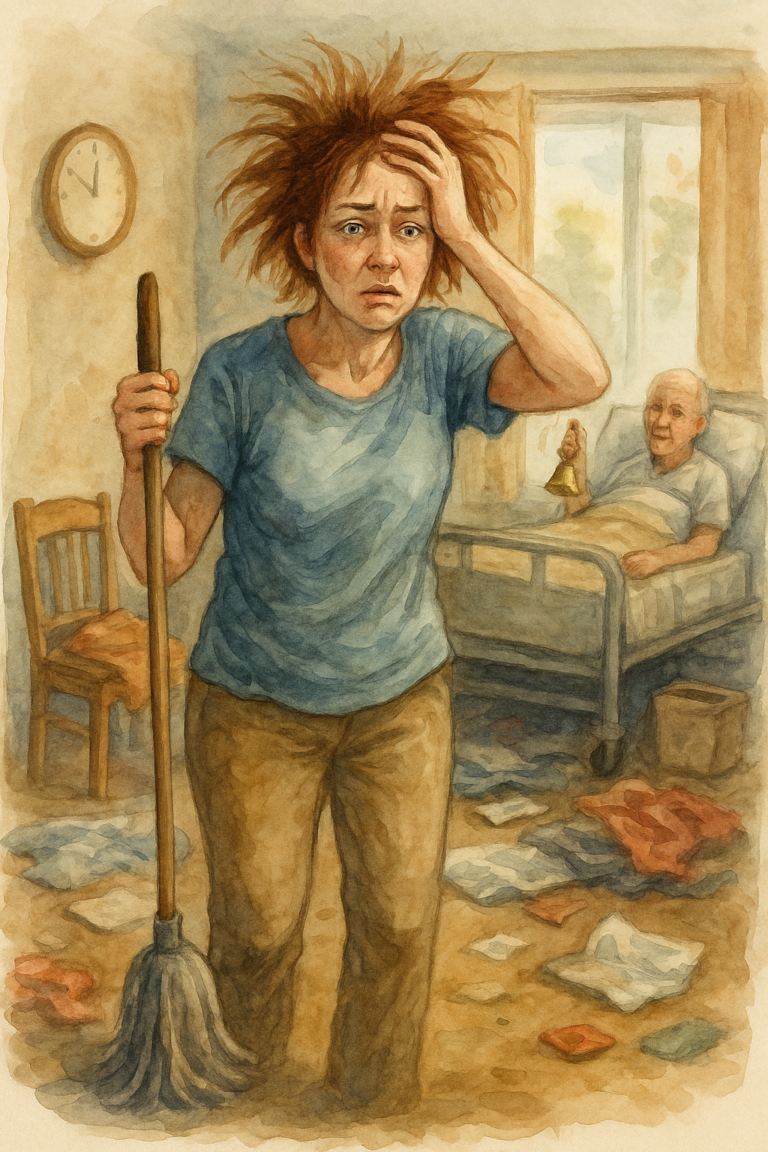
If caregiving feels like too much right now, you’re not weak. You’re overloaded.
This guide walks you through 10 clear steps to reduce overwhelm and think more calmly about what comes next.
If you need additional support, I share more information and resources at JuliaPierceRN.com
Frequently Asked Questions
Yes. Many caregivers feel guilt after breaking a caregiving promise, especially when illness progresses beyond what one person can safely manage.
Guilt often appears after placement because the crisis has passed and caregivers finally have space to process the loss of the plan they believed they could keep.
No. In hospice care, plans often change as dementia, neurologic disease, or physical decline progresses. Adjusting the plan is responding to reality, not failure.
From a Christian perspective, faithfulness is not rigidity. God works through changing seasons, and adapting care does not mean a lack of trust.