You Don’t Need a Perfect Home
When you make the decision to allow your loved one to die peacefully at home—either theirs or yours—the first thing that often comes to mind is:
“How do we set up the house?”
I want to reassure you:
You don’t need a perfect home.
You don’t need a guest room with an en-suite bathroom.
You don’t need fancy equipment or professional-grade caregiving supplies.
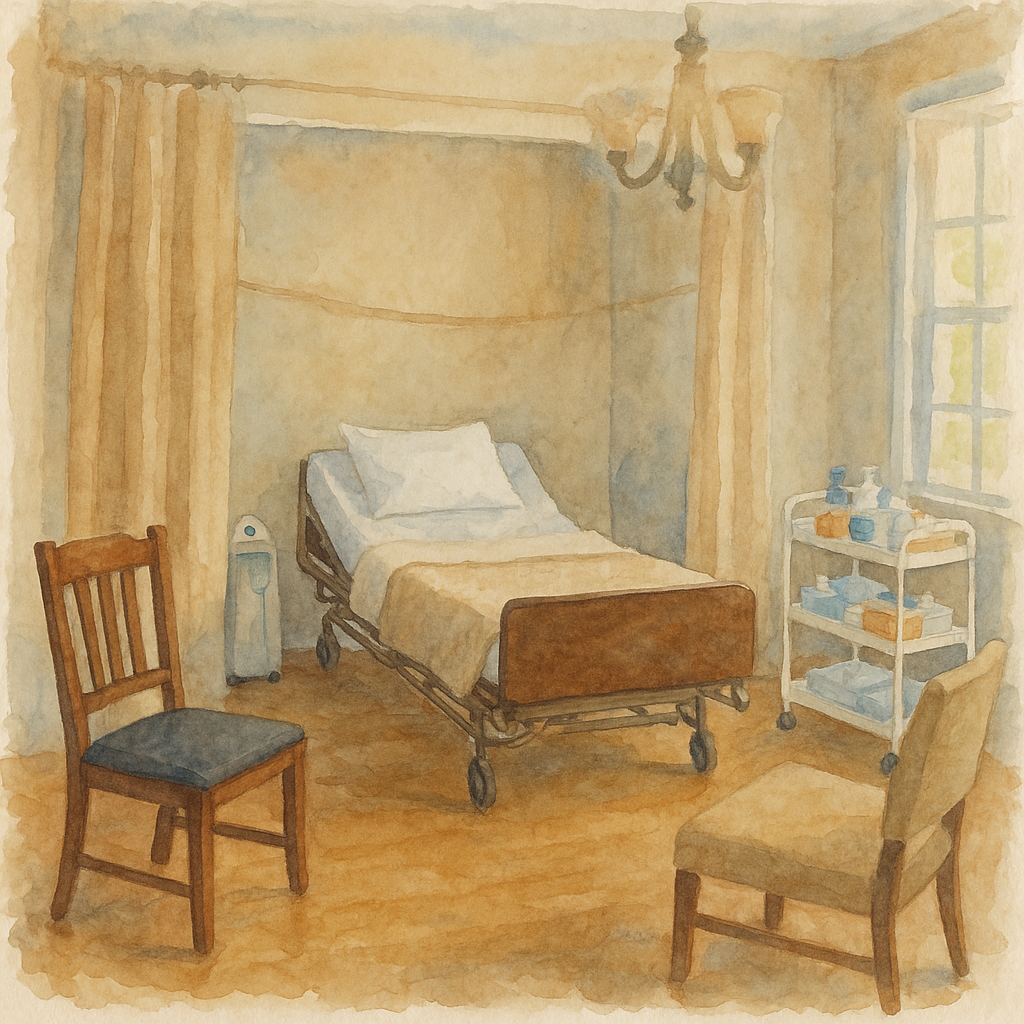
I have seen dining rooms transformed into the most beautiful, sacred spaces for a dying loved one.
I have seen family rooms become peaceful havens.
I’ve even seen beds set up in the corner of a den, divided by a simple sheet strung up for privacy—and it worked perfectly.
All you truly need is a space where your loved one can be safe and comfortable
Here is a simple, gentle guide to help you prepare your home with confidence and compassion
Disclosure: This page contains Amazon affiliate links. As an Amazon Associate, I may earn a small commission if you purchase through these links, at no extra cost to you.
Section 1 — Choosing the Right Space
The “right” room is the one that works for your family.
You do not need a perfectly staged space. What matters most is:
Access for Care
Think about whether you (or other caregivers) can easily reach both sides of the bed to reposition, bathe, or assist.
Ability to Hear Them
If the room is tucked away from the main living area, consider using a:
- Baby monitor
- Camera Monitor – I like this one
- Two-way speaker
- Monitor app
This prevents your loved one from calling out without being heard.
Creating Privacy
Even if you’re using a shared space, privacy is possible:
- Hang a lightweight curtain or sheet
- Use room dividers
- Close doors when providing personal care
- Add soft lighting to create a sense of calm
A peaceful environment matters far more than a perfect floorplan.
2. Safety Checklist
Safety brings peace for you and comfort for them.
- Remove throw rugs
- Clear pathways around the bed
- Add nightlights
- Keep cords tucked away
- Make sure the bed height feels safe
- No open flames/candles around oxygen.
At the bedside, keep:
- tissues
- water/ice chips (if still appropriate)
- medications
- a notebook for symptoms
- lip balm
- lotion
- the hospice number
- A Medication Log (check out my Free Resources Page)
Section 3 — Linens, Supplies & What to Keep Handy
Most families find these items helpful:
- washcloths
- wipes (Ask Hospice for these)
- gloves because nobody wants poop on their fingers.
- oral swabs (ask Hospice for these if needed)
- a small trash bag – grocery bags work great and they are free
- Extra Pillows & Blankets
- Multiple Sets of Sheets (3-4 sets) these are good sheets, a great price and they are white so you can bleach them.
- Mattress Protector – Especially if they are not in a Hospital Bed.
- Incontinence Pads & Under pads – You will want both Disposable ($$$) and Washable pads. Think “Layers of Protection”
- This last item is not a “must get” but its very helpful when your loved one is in bed all the time. A good mattress topper can make a hospital bed comfortable and help prevent bedsores. I personally use this one and its held up well. Remember a mattress protector.
I’ve listed many helpful items on the Products I Love page of this blog—things that truly make caregiving easier.
4. Create an Atmosphere of Peace
Your loved one can still feel the atmosphere around them — even when they can no longer respond.
Consider adding:
- soft worship or instrumental music
- verses or prayers
- meaningful items or scents
- gentle lighting
- familiar voices
People die the way they lived. If your mom hated scented lotion, then please do not apply it to her now. If Dad listened to the sports channel 24-7, turn it on. Alternately if Dad hated sports – do not torture him with ESPN playing all day.
When your loved one can no longer communicate, it will be up to you to guess what they would like. Peace is part of comfort care.
5. A Final Encouragement
You are not expected to create perfection.
Homes are messy. Families are tired. Life is still happening around you.
God meets us in our ordinary spaces — living rooms, bedrooms, and quiet corners where love does its deepest work.
You’re doing a beautiful job.

I hope this article brought you some clarity or comfort. Caring for someone at the end of life can feel overwhelming, and you don’t have to figure it all out alone.
If you’re feeling unsure what to do next, my Free Resources page offers simple guides and tools that many families find helpful as they navigate this season. You can also sign up for my once-weekly emails no spam, no pressure. Just gentle support and education.
If you need additional support, or simply need a place to ask a question or vent, you’re welcome to leave a comment or send me an email. You’re not doing this wrong, and you’re not alone.