Introduction — These Meds Feel Scary, but They’re Meant for Peace
Let me say this plainly: families get nervous when they hear words like morphine or Ativan. You’re not alone — most people think these meds are “too strong” or that they might “speed things up.”
They don’t.
In hospice, these medicines are used in very small, very safe doses to help with the things that make people miserable at the end of life — shortness of breath, pain, panic, and that restless, uncomfortable feeling many people get.
These meds do not cause death.
They do not stop breathing.
They do not “knock someone out.”
Their whole purpose is simple:
to make the dying process more comfortable and less frightening — for the patient and for you.
The Purpose of Comfort Meds
When pain, shortness of breath, or anxiety are running the show, the body uses every bit of energy just trying to cope. People become exhausted, withdrawn, and overwhelmed.
But when we manage those symptoms well:
- Breathing eases
- Pain settles down
- The mind calms
- The body relaxes
And here’s something families don’t always realize:
A comfortable person often becomes more alert, more engaged, and clearer in their thinking.
Pain and panic make people foggy. Comfort brings clarity.
Good symptom management gives your loved one the chance to spend their energy on what matters instead of fighting their own body.
Comfort meds help people live the time they have with more peace, not less.
The Main Comfort Meds Explained Simply
1. Morphine (Roxanol)
What it’s for:
Shortness of breath and pain.
How it actually works:
Morphine relaxes the breathing muscles and takes away that horrible “air hunger” feeling. It helps the body breathe easier and with less effort. It also eases pain at the same time.
The big myth:
“Morphine speeds up death.”
The truth:
It doesn’t.
At hospice doses, morphine is one of the safest medications we use. It doesn’t stop breathing — it simply makes breathing more effective and less stressful.
Here’s what I tell families all the time:
Struggling to breathe is far more dangerous than morphine will ever be.
When we ease that struggle, people relax, oxygen use improves, and the whole body settles down.
Morphine is not about “knocking someone out.”
It’s about comfort, calm, and giving the person a chance to rest instead of fighting for every breath.
2. Ativan (Lorazepam)
What it’s for:
Anxiety, restlessness, agitation, and that “I can’t settle down” feeling many people get near the end of life.
How it works:
Ativan calms the nervous system. It takes the edge off panic, eases muscle tension, and helps the mind quiet down.
When someone is anxious, their breathing gets tight and shallow. When we calm the anxiety, the breathing often improves too.
What families worry about:
“They’re going to get addicted” or
“It will knock them out.”
Here’s the truth:
At the end of life, the body is not forming addictions.
And at hospice doses, Ativan is very gentle. It doesn’t force someone to sleep — it simply helps them relax enough to rest.
When people aren’t fighting fear or restlessness, they’re more comfortable, and you’re able to care for them with much less stress.
3. Atropine or Hyoscyamine (Drops or tablets)
What it’s for:
That loud, rattling, gurgling breathing that happens when someone can’t swallow their saliva anymore. Families call it the “death rattle.” It’s not painful, but it can be upsetting to hear.
How it works:
These medicines dry up excess secretions in the throat. They don’t change the breathing. They don’t stop breathing. They don’t sedate the person.
They simply help reduce the sound so everyone can rest easier.
Common fear:
“Is this stopping their breath?”
Clear answer:
No.
This medication doesn’t affect the lungs at all. It just dries up mucus the person can’t clear on their own.
Here’s what I tell families:
The noise sounds scary, but it doesn’t bother your loved one.
Atropine just helps the room feel calmer for you.
It’s a comfort tool — not a breathing drug, not a sedative, and definitely not something that speeds up death.
4. Haldol (Not every doctor uses this one)
What it’s for:
Hallucinations, agitation, restlessness, or sudden changes in thinking that make the person uncomfortable or unsafe.
This is especially helpful when someone is picking, pulling, trying to get out of bed, or seeing things that frighten them.
How it works:
Haldol calms the mind. It helps settle confusion and reduces those intense, restless behaviors that can happen near the end of life.
We use tiny hospice doses, just enough to bring things back to a peaceful level.
Common fear:
“I don’t want them drugged up.”
The reality:
Haldol is not about knocking someone out.
It’s about keeping them comfortable, safe, and calm when their brain is overwhelmed.
Here’s how I explain it to families:
If the mind is in overdrive, the body can’t rest. Haldol brings that storm down so your loved one can relax.
At hospice doses, it’s very safe, very effective, and makes a huge difference for people who are distressed or agitated.
5. Zofran, Promethazine, or Compazine
What they’re for:
Nausea, vomiting, queasy stomach, or that “I just don’t feel right” nausea that often shows up near the end of life.
How they work:
These meds calm the nausea center in the brain and settle the stomach. They make it easier for the person to rest, take meds, and stay comfortable.
What families should know:
Nausea is exhausting. It can make people refuse food, refuse meds, and feel miserable.
When we treat it, people relax, breathe better, and are often more willing to interact.
The truth:
These meds don’t sedate the person or “mask symptoms.”
They simply remove one more layer of discomfort so your loved one can rest and feel more at ease.
Sometimes we rotate between them because everyone responds differently — the goal is simply to find what works best for your loved one.
How and When We Use Them
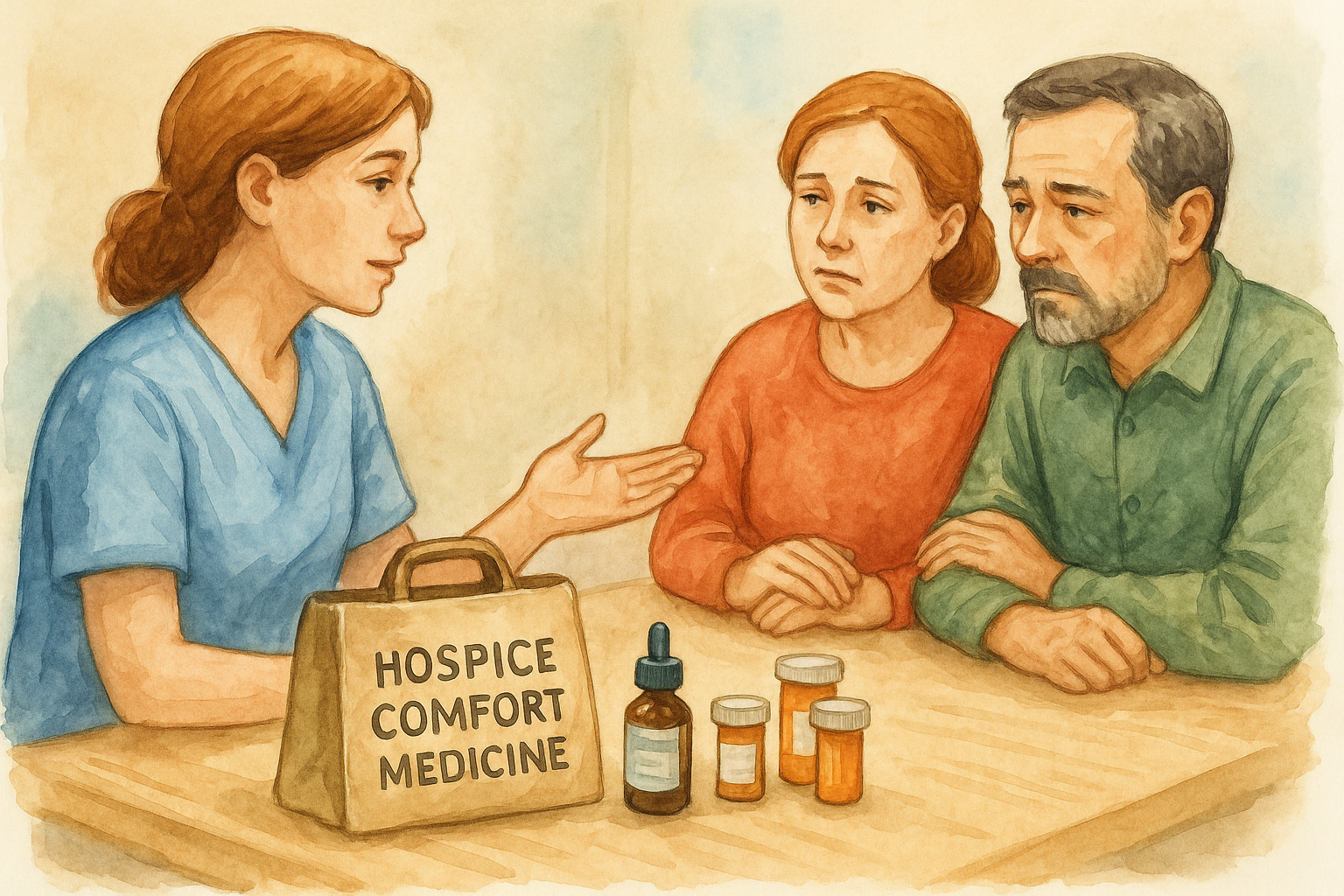
Comfort meds in hospice are always used only as needed. You stay in control, and we teach you exactly what to look for.
Here’s how we approach them:
PLEASE, PLEASE DO NOT go into the comfort kit and start giving medications willy nilly. (Yes, it has happened) Call the Hospice team if you believe it is time to open the comfort meds.
Your RN will walk you through every step
We don’t hand you a bag of meds and wish you luck. We show you how to draw them up, how much to give, when to give it, and what to expect afterward.
Tiny doses
We are not giving hospital-sized doses. Hospice doses are small, safe, and meant to take the edge off symptoms — not knock someone out.
Given only when needed
You’re not putting someone on a schedule unless symptoms are constant. Most meds are given based on what you see: pain, breathing trouble, restlessness, nausea, secretions.
You decide when it’s time
You know your loved one better than anyone. We teach you what each symptom looks like and when the medication will help. You’re in the driver’s seat.
Safety: What Families Often Fear
Almost every family has the same worries, and they’re all understandable. Here’s the truth, plain and simple:
These meds are not addictive at the end of life
Addiction requires time, repeated high doses, and a body that’s building tolerance. None of that is happening here.
They do not damage organs
We’re using tiny amounts. Their purpose is comfort, not long-term use. The body is not being harmed.
They do not hasten death
This is the biggest fear, and it’s simply not true when used correctly — and in hospice, they always are.
We treat symptoms; we do not shorten life.
They are not “too strong”
The doses we use are much smaller than hospital doses. Most of the time, the person becomes more relaxed and engaged because they’re not fighting pain or breathing issues.
They only cause drowsiness when someone is already exhausted
If a person is sleeping more, it’s usually because the body is naturally shutting down — not because of the medication.
Everything is tailored to your loved one
We adjust doses based on what you see: their comfort, their breathing, their restlessness, their pain. Nothing is automatic. Nothing is forced.
Here’s what I always remind families:
Giving comfort medications is not harming someone. It’s preventing suffering.
You’re helping them have the most peaceful, dignified experience possible.
Get a downloadable Quick Reference Chart Here
A Gentle Reassurance
I want you to hear this clearly: you are not harming your loved one by giving comfort medications. You are not “speeding anything up,” and you’re not doing anything wrong.
What you are doing is giving them relief from the things that make this stage harder — pain, panic, shortness of breath, restlessness. You are helping them settle, breathe easier, and rest in peace instead of struggle.
You are offering comfort, dignity, and mercy in a moment where those things matter more than anything else.
And if you’re a person of faith, let me add this:
God gives wisdom, and comfort care is part of His mercy in suffering.
There is nothing un-Christian or unfaithful about easing pain. It is an act of love.
You’re showing up.
You’re doing the hard things.
And your presence means more than you know.
I hope this article brought you some clarity or comfort. Caring for someone at the end of life can feel overwhelming, and you don’t have to figure it all out alone.
If you’re feeling unsure what to do next, my Free Resources page offers simple guides and tools that many families find helpful as they navigate this season. You can also sign up for my once-weekly emails no spam, no pressure. Just gentle support and education.
If you need additional support, or simply need a place to ask a question or vent, you’re welcome to leave a comment or send me an email. You’re not doing this wrong, and you’re not alone.