This is the final part of my four-part hospice education series. My hope throughout this entire series has been to give you clarity, encouragement, and the feeling that you’re not walking this alone.
My goal with this article is to talk to you the same way I would if I were sitting beside you at the bedside — to walk you through what happens after your loved one dies, what you need to do (and don’t need to do), and how hospice supports you even after that final breath.
If you haven’t read the other parts of this series yet, you can always go back later. But for now, let’s gently take the next steps together. You’re not alone.
The First Moments — What You May Feel (And Why It’s All Normal)
When someone you love dies, even when you’ve been expecting it, the moment still feels unreal. I’ve been with so many families in this exact place, and I want you to hear this clearly: whatever you feel in those first moments is normal.
When your loved one takes their last breath, the room changes. The air feels different. And your heart does, too.
You may feel:
- shock, even if you’ve known this moment was coming
- relief, because their suffering is over
- numbness, like you’re watching yourself from the outside
- sadness, deep and immediate
- calm, almost peaceful
- guilt, especially if relief was your first reaction
- confusion, unsure what to do next
I’ve been a nurse for more than two decades, and I’ve seen every kind of response. Not once — not ever — have I seen a “wrong” one.
Some people cry.
Some stare at the wall.
Some start tidying the room.
Some call family immediately.
Some sit in silence and just breathe.
Your body and heart will react in their own way, at their own pace. There is no right way to feel. There is no timeline you’re supposed to follow. There is only this moment, and the truth that you’re not doing it wrong.
Let yourself feel what you feel. Let yourself not feel what you don’t.
Both are okay.
Who You Call and What Happens First
You don’t have to do anything right now.
This is not an emergency.
There is no rushing.
There is no “next step” you have to jump into.
When someone dies on hospice, you do not call 911.
You call us — your hospice team. But you don’t have to call right this second.
Take a breath.
Stay where you are.
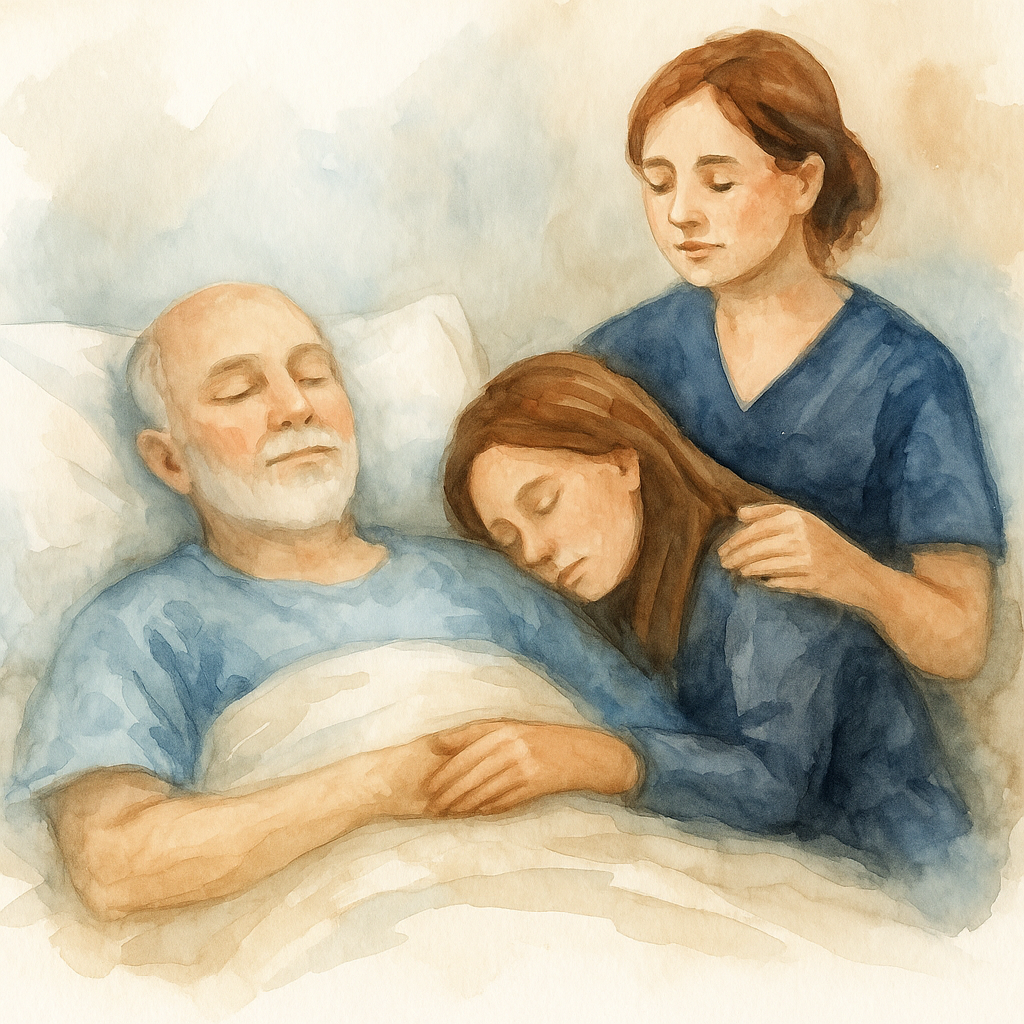
Hold their hand.
Lay your head on their chest.
Talk to them. Pray. Sit in silence.
Let the moment be what it is.
You have time.
You are not doing anything wrong by waiting.
You can take your time — Just sit, breathe, and be with your loved one.
I usually tell families this: you don’t need to rush, but it’s best to call within an hour or two so we can support you and take care of the next steps.
The home becomes very still after the last breath. It’s a sacred kind of quiet. And you are allowed to be in that quiet for as long as you need.
When you’re ready, you call.
And then we take the next steps together.
What the Nurse Does When They Arrive
The first thing your nurse will do is simply come into the room quietly and greet you. We don’t walk in with clipboards or busy hands. We walk in as another human being stepping into a sacred moment.
Confirming the Death (Calmly, Respectfully)
We will quietly confirm that your loved one has died by checking breathing and heart sounds. There is nothing invasive or harsh. Most families don’t even notice we’re doing it because it’s done so gently. After we have confirmed the death of your loved one, we will notify the hospice doctor and pronounce time of death. This time will be the time we certified the death, not necessarily the time your loved one died.
Giving You Time
After that, we step back and let you have more time with your loved one — as much as you need.
This is your moment, not ours.
If you want to sit, pray, talk, touch, cry, or simply be still, you can. You’re not in the way. You’re not holding anything up.
Caring for Their Body
When you’re ready, not before, the nurse can help with small acts of care:
- gently washing your loved one
- fixing hair
- straightening blankets
- changing clothing if requested
Families often tell me these small rituals feel comforting and meaningful, and I agree — they’re part of honoring your loved one.
Completing Paperwork and Phone Calls
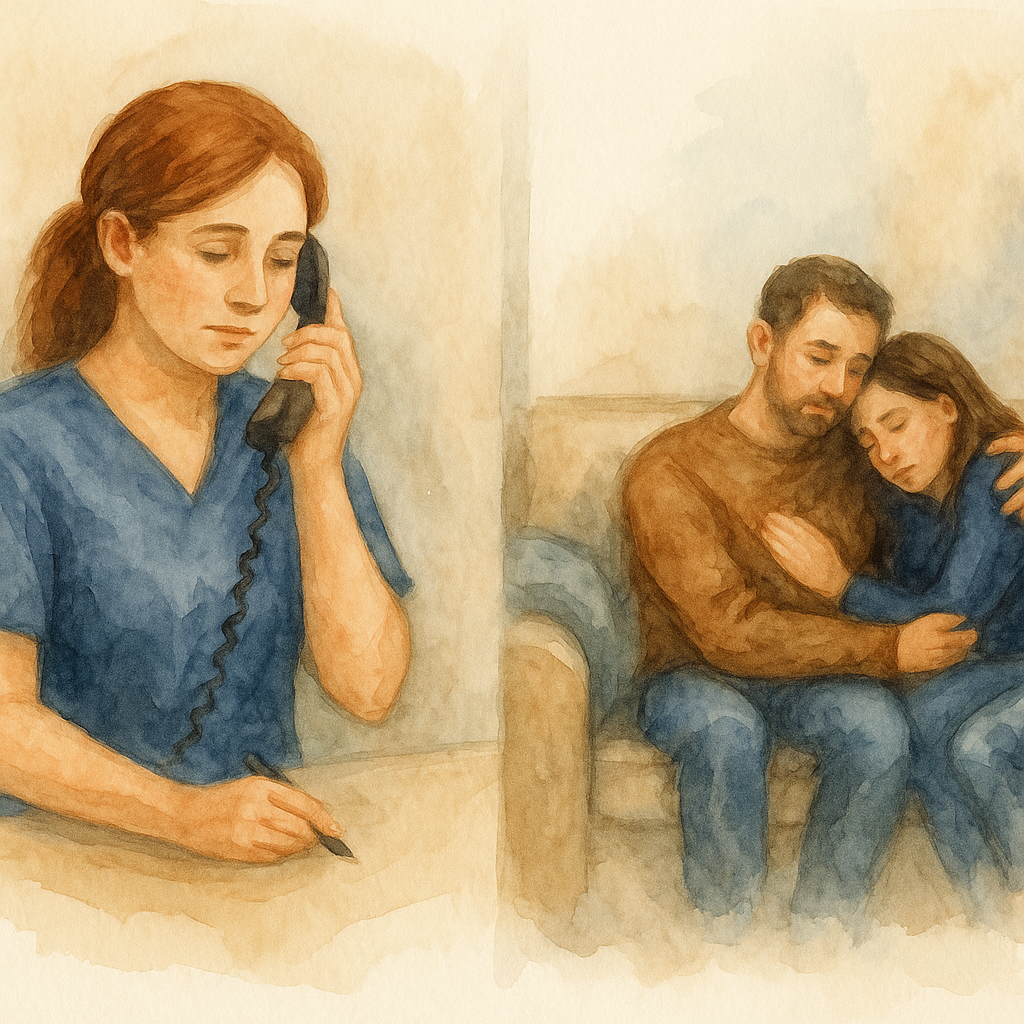
When you feel ready, your nurse will quietly step aside and call the funeral home for you. You don’t need to gather paperwork or make any big decisions in that moment — we provide them with the information they need, and we handle that first phone call so you don’t have to.
The funeral home will come to the house when you are ready for them. Again, nothing is rushed.
And usually, within the next 24–48 hours, the funeral home will contact your family to go over the additional details — things like service plans, clothing, and any arrangements you already had in mind.
I also want to gently prepare you for one thing that often catches families by surprise:
The funeral home may ask for your permission to begin the embalming or cremation process.
This question can feel sudden or even jarring if you weren’t expecting it, so I want you to know ahead of time. They’re not trying to rush you — they’re simply asking because they legally need your consent before taking the next steps.
You can answer right away if you’re ready, or you can take some time. You are allowed to say,
“Let me think about that and I’ll call you back.”
You’re still in control.
Your wishes matter.
And nothing needs to be decided in the first moments of grief.
Coordinating the Next Steps
After we’ve taken care of your loved one and you’ve had the time you need, your nurse will gently begin guiding you through the next steps. Nothing is rushed. Nothing is done without explaining it first. This part is simply about helping you feel supported and steady.
Medical Equipment Pickup
Your nurse will arrange for all medical equipment — the hospital bed, oxygen, wheelchair, bedside table, or anything else we delivered — to be picked up.
This usually happens within a day or two, not immediately, so you’re not dealing with people coming in and out of the home while everything still feels fresh. You will not have to call vendors yourself — we take care of that for you.
Safe Disposal of Medications
If there are comfort medications in the home, especially narcotics, your nurse will help you dispose of them safely.
We handle this together so you don’t have to wonder what to do or feel unsure. If family members want to be part of the process, they can. If they would rather step out, that’s perfectly fine too.
Nothing is left on you alone.
Your Bereavement Plan
Before your nurse leaves, we’ll go over what kind of grief support is available to you. Hospice doesn’t end today — you continue to receive bereavement support for the next 12–13 months.
Your bereavement plan may include:
- follow-up calls
- support visits
- grief resources for adults, children, or teens
- information on local or faith-based support groups
- memorial services offered by the hospice agency
You choose the level of support you want. Some families want frequent check-ins; others prefer something more spaced out. There is no wrong choice — this is your journey, and we simply walk alongside you.
Everything in this moment is done slowly, respectfully, and with your comfort at the center.
You’re not expected to remember it all. You’re not expected to do it perfectly.
We’re here to guide you, step by step, until you feel steady enough for us to leave.
Faith-Filled Reassurance

If your family welcomes spiritual support, I want to leave you with the same reminders I share at the bedside:
- God is near to the brokenhearted.
- Death is not the end — it is a doorway.
- Caring for someone at the end of life is sacred work.
- Peace often settles into the home during the final hours.
- God provides strength one day at a time, and that is enough.
Hospice cannot take away the sadness — but it can help create space for peace, connection, and meaning in these final moments.
Your loved one is not alone.
And neither are you.
Thank you for allowing us to care for your loved one. It is an honor we never take lightly.
Before You Go
Thank you for spending this time with me. I know this is a tender part of the journey, and I hope this article helped you feel a little more steady, a little more informed, and a little less alone.
If you’ve read all four parts of this series, you now understand:
- what hospice is and isn’t
- what a typical week looks like
- what families often don’t realize
- and what happens after death
I hope these pieces have made you feel less alone and more supported. And if you’re walking through this right now, please hear my heart — you are doing better than you think.
If you’d like to keep learning, you’re always welcome to explore my other blog posts — I write about caregiving, hospice, and the small things that bring comfort at the end of life.
And if you need practical tools, my Caregiver Resources page is there for you anytime.

I hope this article brought you some clarity or comfort. Caring for someone at the end of life can feel overwhelming, and you don’t have to figure it all out alone.
If you’re feeling unsure what to do next, my Free Resources page offers simple guides and tools that many families find helpful as they navigate this season. You can also sign up for my once-weekly emails no spam, no pressure. Just gentle support and education.
If you need additional support, or simply need a place to ask a question or vent, you’re welcome to leave a comment or send me an email. You’re not doing this wrong, and you’re not alone.

One Comment
Comments are closed.