Why won’t my loved one eat anymore?
That question sends families into panic when a dying loved one stops eating.
Food feels basic. Necessary. Loving.
So when a plate goes untouched, caregivers feel fear, guilt, and urgency all at once.
Families worry:
Are they starving? Should I push harder? Am I letting something terrible happen?
As a hospice nurse, I want you to hear this clearly:
According to the National Institute on Aging, loss of appetite is common as the body slows near the end of life.
Loss of appetite at the end of life is normal. It is expected. And it is not painful for the person who is dying.
What you’re seeing is the body slowing down — not giving up.
Understanding what’s really happening when someone is not eating at the end of life can relieve a tremendous amount of fear and help you care for your loved one with peace instead of panic.
The Pattern Families Often Notice When Eating Slows at the End of Life
As families accept that appetite loss is normal, another question usually follows:
“Why are they still willing to eat some things — but not others?”
When a dying person stops eating, it often follows a predictable pattern, especially in people with dementia or advanced illness.
Most commonly:
- First, they lose interest in meat
- Then vegetables
- Then fruit
- Sweets are often the last foods accepted
This isn’t picky eating. It’s physiology.
As the body weakens, it has difficulty digesting protein and fiber. Sweet foods require less effort to chew and swallow and are easier for the brain to accept.
Many families are surprised — and sometimes relieved — to see that their loved one will still enjoy desserts.
I once cared for a woman who spent her final months happily drinking:
- milkshakes
- eating M&Ms
- sipping Coca-Cola
She was comfortable. She was content.
At this stage, eating is no longer about calories, nutrition, or building strength.
Food becomes about comfort and pleasure — not survival.
Why Forcing Food Causes Harm at the End of Life
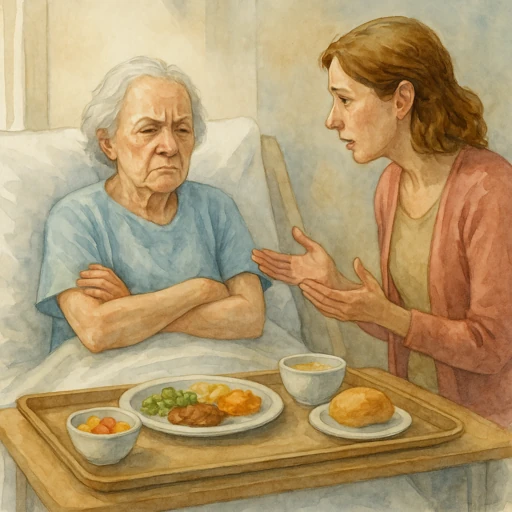
When families see their loved one not eating or drinking, panic often turns into pressure. Caregivers plead. Bargain. Insist. Just one more bite.
But at the end of life, the body can no longer process food the way it once did.
Forcing food or fluids can cause real harm, including:
- nausea
- vomiting
- choking
- diarrhea
- abdominal cramping
- bloating
- aspiration into the lungs
- increased discomfort
As organs slow, food and fluid have nowhere to go. Instead of providing strength, they can back up into the stomach, airway, or lungs.
There is something families often don’t realize:
Many dying patients continue eating past the point their body can use food because they want to make their family happy.
They take bites out of love — not hunger. Those bites may look reassuring, but they often leave the patient feeling nauseated, bloated, uncomfortable, or short of breath afterward.
This is why hospice teams strongly discourage force-feeding.
You cannot love someone into eating. You can only increase suffering by pushing food their body no longer wants or needs.
They Are Not Starving to Death Because They Stop Eating at the End-of-Life
This is one of the greatest fears families carry when a loved one stops eating.
Caregivers imagine hunger, suffering, and a slow decline caused by the absence of food. They worry they are watching starvation happen in real time.
That is not what is occurring in the body.
When someone is dying and no longer eating, the body enters a state similar to fasting. As digestion shuts down, the body shifts how it produces energy. Natural chemicals are released that reduce hunger and create a sense of calm.
This process is not painful. In many cases, it actually decreases discomfort.
From a hospice perspective, this is not a failure of care. It is part of the body’s design as life draws to a close. The drive for food fades because it is no longer needed.
The body no longer sends hunger signals the way it does in a healthy person..
The distress you see around food is usually happening in the family — not in the person who is dying.
Understanding this truth often lifts a tremendous amount of guilt and allows caregivers to stop fighting the body and start supporting it.
What You Should Do Instead of Trying to Make them Eat
When eating stops, many caregivers feel helpless.
If you can’t fix it, push it, or improve it, what are you supposed to do?
The answer is simpler — and kinder — than most families expect.
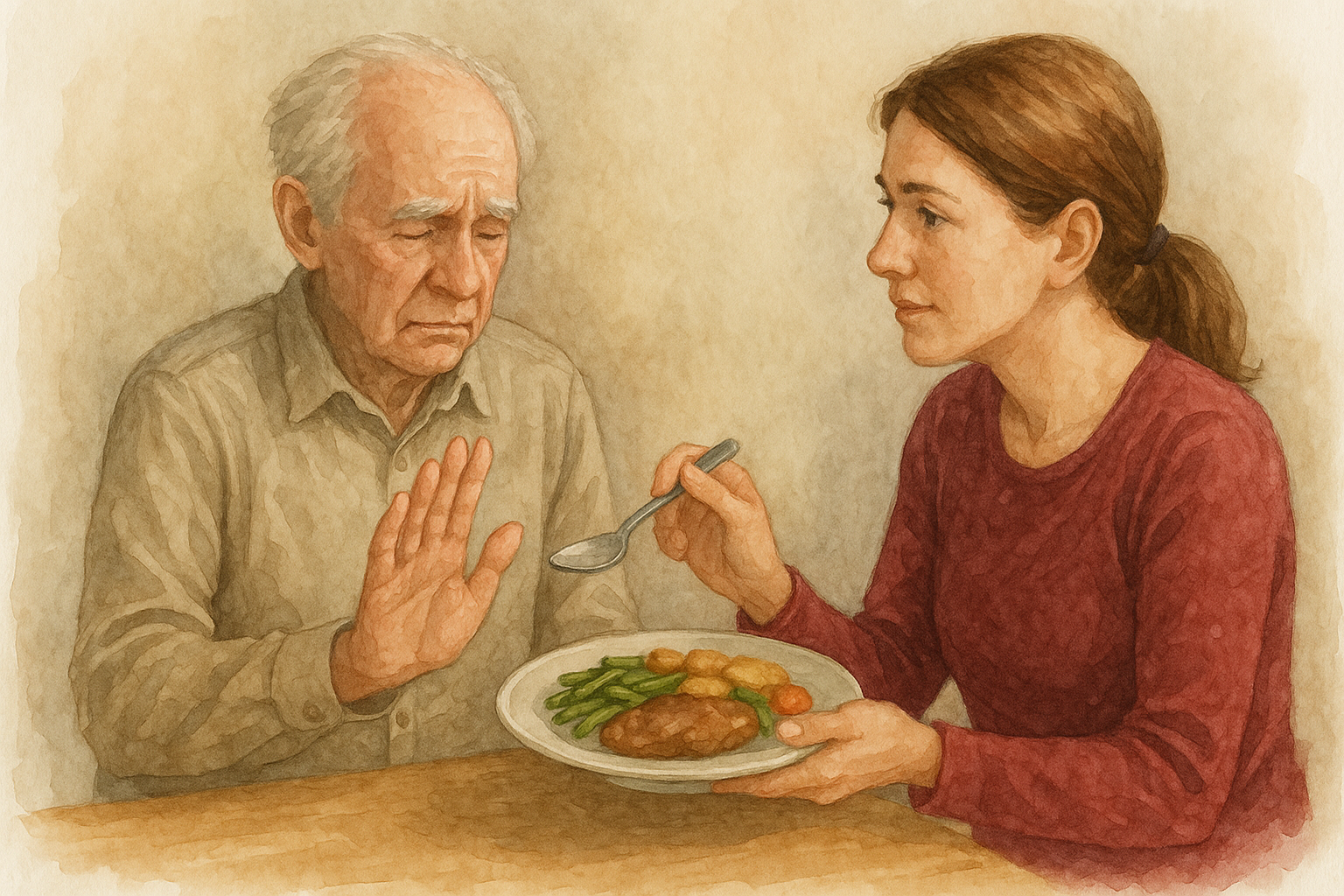
Offer food, but do not pressure. Place small amounts of familiar favorites in front of your loved one and let them decide. If they take a bite, that’s fine. If they don’t, that’s fine too.
Avoid asking repeatedly if they are hungry. That question can feel like pressure when the body already knows the answer.
This is not the time to focus on calories, protein, or nutrition goals. Mixing elaborate foods or trying to “sneak” nutrients into meals often causes more discomfort than benefit. At this stage, food does not build strength or prolong life.
What helps most is respecting the body’s signals.
When caregivers stop pushing food, many patients appear more relaxed. They are no longer trying to eat for someone else’s sake. Care becomes gentler. The room becomes calmer.
Let eating be an option — not an obligation.
A Crucial Warning: Never Force Food
There is one boundary that should never be crossed at the end of life.
Food should never be forced.
I once walked into an assisted living facility and witnessed staff holding down a woman’s arms while attempting to force food into her mouth. She was weakly crying “no,” trying to lift her arms, and turning her head away. She was clearly unable to consent.
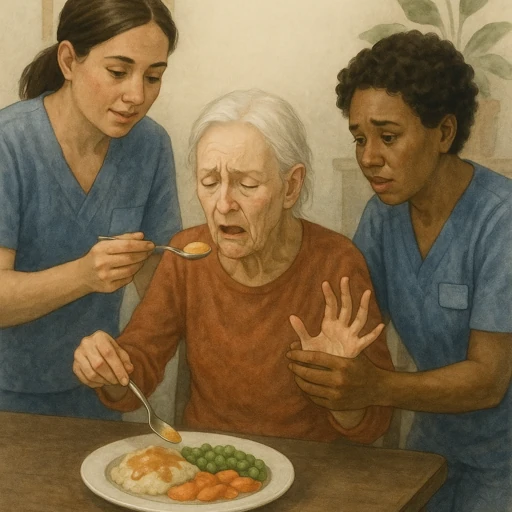
What was happening was neither kind, nor safe, nor legal.
I immediately stopped them. I consoled the woman — who was not even my patient — and notified the owner of the facility of what I had witnessed.
Forcing food or fluids places someone at high risk for choking and aspiration. It can cause panic, shortness of breath, and severe distress. In medical and legal settings, this is considered abuse.
Never hold someone’s mouth open. Never place food or liquid into the mouth of a person who is not fully awake. Never restrain someone to make them eat or drink. And never “sneak” food into the mouth when someone has already said no — verbally or nonverbally.
If a person turns their head away, clenches their lips, falls asleep, or shows discomfort, that is a refusal.
And refusal must be respected.
At the end of life, eating is optional. Consent still matters. Comfort always comes first.
If you are unsure what is safe, ask your hospice nurse for guidance. You are not expected to navigate this alone.
Final Message
Feeding is how families show love.
So when someone stops eating it can be very distressing for the family.
But at the end of life, the rules change.
Your loved one’s body knows what it needs — and what it no longer does. Appetite fades because the body is slowing down, not because you failed or stopped caring.
You are not starving them.
You are not causing harm by respecting their cues.
You are allowing a natural process to unfold with dignity.
There are many ways to show love when food no longer fits:
Sit with them.
Hold their hand.
Speak gently.
Play music.
Pray if that brings comfort.
Keep the room calm and safe.
Love is not measured in calories.
Love is presence.
They are not dying because they stopped eating, they stopped eating because they are dying.
I hope this article brought you some clarity or comfort. Caring for someone at the end of life can feel overwhelming, and you don’t have to figure it all out alone.
If you’re feeling unsure what to do next, my Free Resources page offers simple guides and tools that many families find helpful as they navigate this season. You can also sign up for my once-weekly emails no spam, no pressure. Just gentle support and education.
If you need additional support, or simply need a place to ask a question or vent, you’re welcome to leave a comment or send me an email. You’re not doing this wrong, and you’re not alone.
Commonly Asked Questions
Yes. It is normal for appetite to fade at the end of life as the body slows down and no longer needs food the same way it once did. This change is expected and part of the natural dying process.
No. A dying person is not experiencing hunger the way a healthy person would. As the body shuts down, hunger signals decrease and discomfort often lessens rather than increases.
As organs slow, the body can no longer process food and fluids normally. The desire to eat and drink fades because the body no longer needs them, not because the person is giving up.
No. Forcing food or fluids can cause choking, aspiration, nausea, and significant distress. At the end of life, eating should always be offered gently and never forced.
Sweets are often easier to swallow and digest when appetite is low. At this stage, food is about comfort and pleasure rather than nutrition, calories, or protein.
Offer small amounts of favorite foods without pressure. If they decline, focus on comfort, presence, and connection rather than trying to meet nutrition goals.