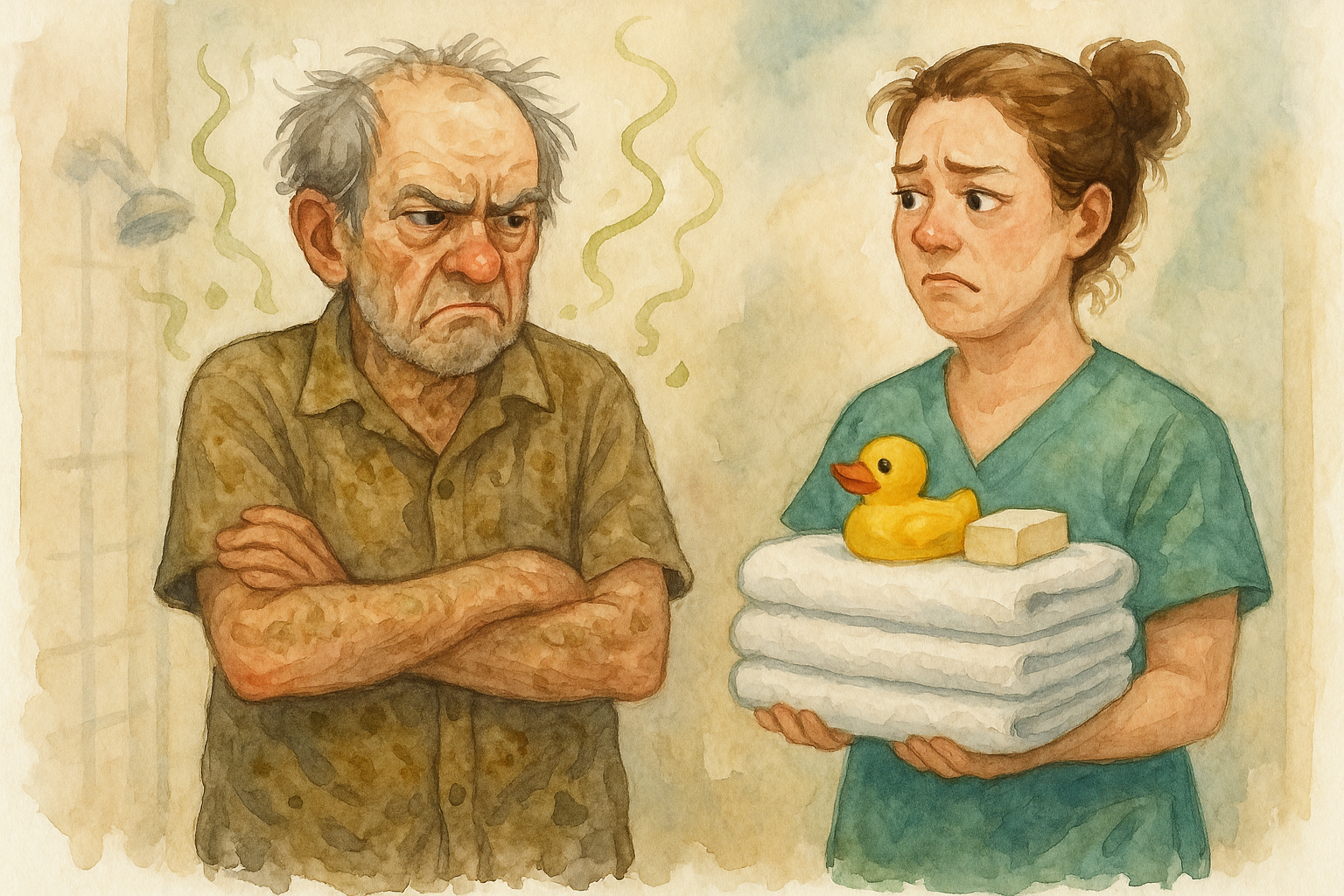
The Situation Families Are Afraid to Admit
“My dad smells. He won’t shower. He gets angry when we ask. I don’t know what to do anymore.”
Families say this in whispers.
They’re embarrassed. Frustrated. Guilty. Afraid of being judged.
This is not laziness. This is not stubbornness. And this is not a failure on your part. When dad won’t shower, many caregivers assume they’re doing something wrong — when in reality, this is a common and expected caregiving challenge.
In Fact, this is one of the most common caregiving struggles, and almost no one talks about it out loud.
Why Older Adults and Dying Patients Refuse to Shower
From the outside, it looks simple.
From inside the body, it often feels impossible.
Showering requires energy, balance, temperature changes, and tolerance for being exposed. As bodies weaken, what once felt routine can become overwhelming.
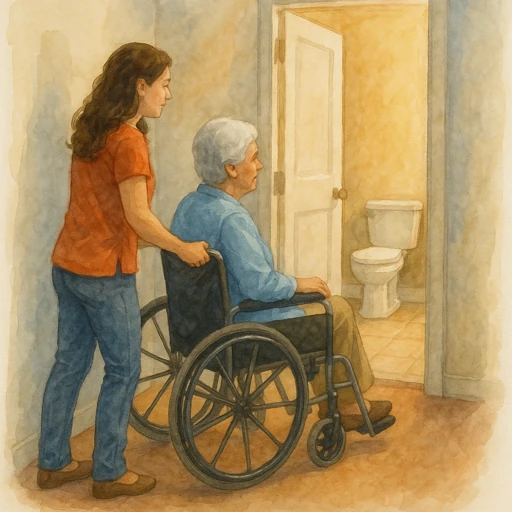
Fear plays a role too. Fear of falling. Fear of slipping. Fear of being seen naked or needing help. For many people, the shower becomes the place they feel most vulnerable.
Pain and discomfort add another layer. Arthritis, wounds, shortness of breath, or fatigue can turn a “quick shower” into an exhausting ordeal.
Then there’s dignity. Being helped with bathing can feel humiliating. When so much independence is already gone, control over bathing may be one of the last things a person can protect.
And for those with dementia or other cognitive changes, refusing to shower often comes from confusion, fear, or misunderstanding what’s being asked. They may not recognize their body odor or understand what they are being asked to do.
Refusing to shower is often about protecting dignity, not rejecting care.
This is one of the most common reasons families search for answers when an elderly parent refuses to shower.
Why Forcing the Issue Usually Makes Things Worse
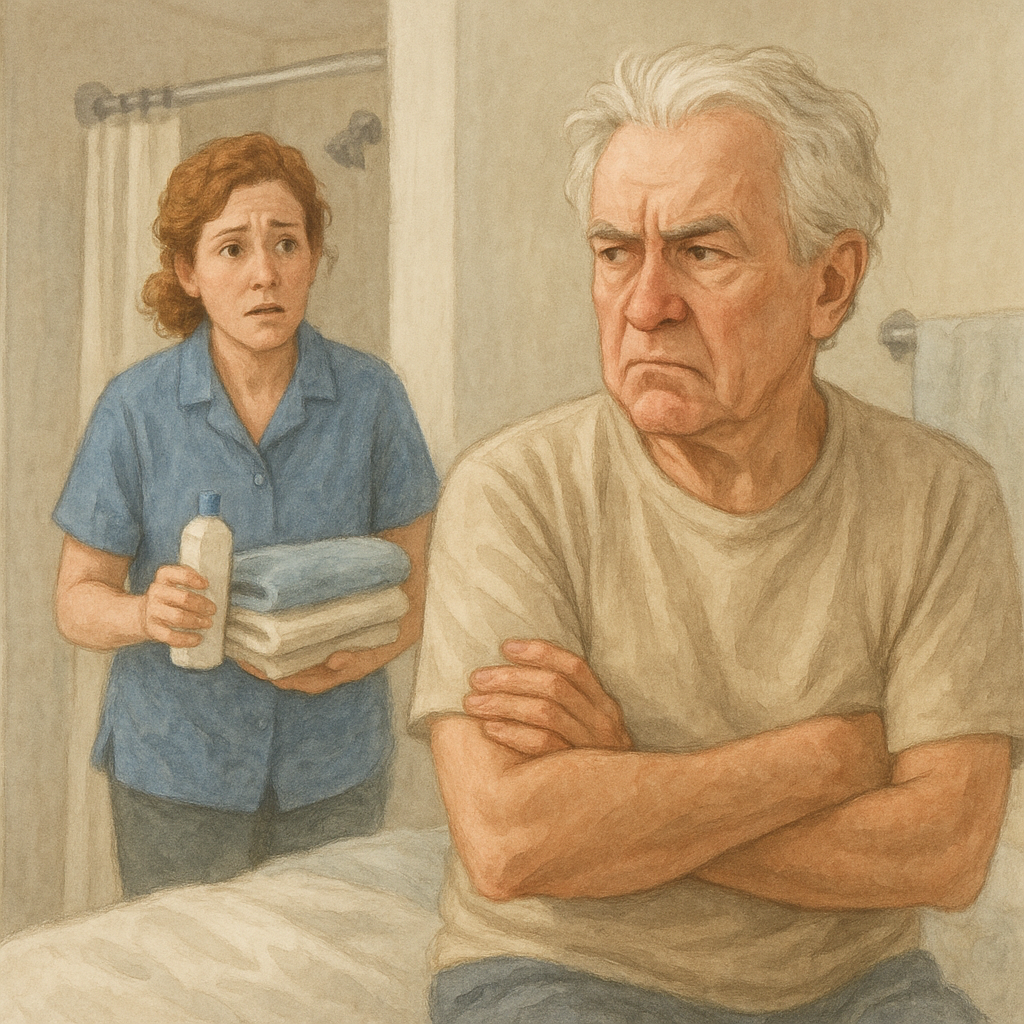
When bathing turns into a power struggle, everyone loses.
Forcing the issue increases agitation, fear, and resistance. Trust erodes. Future care becomes harder, not easier.
I often tell families this:
If every interaction becomes a battle, the relationship suffers — and so does the care.
Reframing Cleanliness at This Stage of Life
This is where many caregivers finally exhale.
Comfort matters more than routine.
Safety matters more than soap schedules.
In hospice care, we prioritize comfort, dignity, and peace. A full shower is not required to provide good care — especially near the end of life.
What Actually Helps When Dad Won’t Shower
Shower alternatives
Shower alternatives often work better when you can’t get dad in the shower: warm washcloths, no-rinse bathing wipes, bed baths, or seated sponge baths.
Break it into pieces
Breaking tasks into pieces helps too. One body part at a time. Different days for different tasks. No rule says everything has to be done at once.
Timing matters
The best window is often when pain is controlled, energy is highest, and no one feels rushed.
Language matters
Language matters. “You need to” almost always backfires. “Let’s just freshen up,” or offering simple choices, preserves dignity and cooperation.
Odor control without shame
Odor control doesn’t have to involve shame. Clean clothes, fresh bedding, barrier creams, and deodorizing products often matter more than showers themselves.
This is why I often recommend alternatives to traditional bathing. These aren’t shortcuts — they’re tools that reduce distress while preserving dignity. For many people, they’re safer, kinder, and more effective than showers ever were.
Mr. Joe’s Story
I once cared for a man in a nursing home whose odor had become overwhelming. Staff avoided his room when possible. Other residents moved away. No one would sit with him at meals.
Everyone assumed the answer was a shower — but he refused every attempt. He became physically violent when staff attempted to get him into the shower. He was scared, embarrassed, and exhausted.
When Hospice came in we stopped fighting the shower. We used bathing wipes, cleaned him gently in bed, and focused on comfort instead of routine. We were able to manage about 2 sponge baths a week. Out of desperation, I tried a deodorizing cream on him and the difference was amazing.
To everyone’s surprise, it worked — not just for hours, but for days.
The goal wasn’t perfection. It was dignity. And once we stopped forcing the shower, his fear eased and his care improved.
The Cream I used was LUME – I am not affiliated with them in any way, but this stuff is miracle magic when it comes to reducing stinky smells for days!
When Smell Becomes a Health or Social Issue
Sometimes hygiene does need attention — especially when skin breakdown, infections, or isolation start to appear.
This is when bringing in hospice or home health can help. Let professionals take the lead. It protects the family relationship and removes you from the role of enforcer.
The Emotional Toll on Caregivers
We need to say this out loud.
Caregivers feel resentment. Disgust. Anger. Embarrassment, and then crushing guilt for feeling those things.
Here’s the truth:
Feeling frustrated does not mean you love them less.
It means you’re human.
I promise you that we will not come into your home and judge you. We understand what an impossible task this is, and we are here to help you.
When It’s Okay to Let It Go
Near the end of life, hygiene expectations change.
Comfort matters more than appearances. Peace matters more than routines.
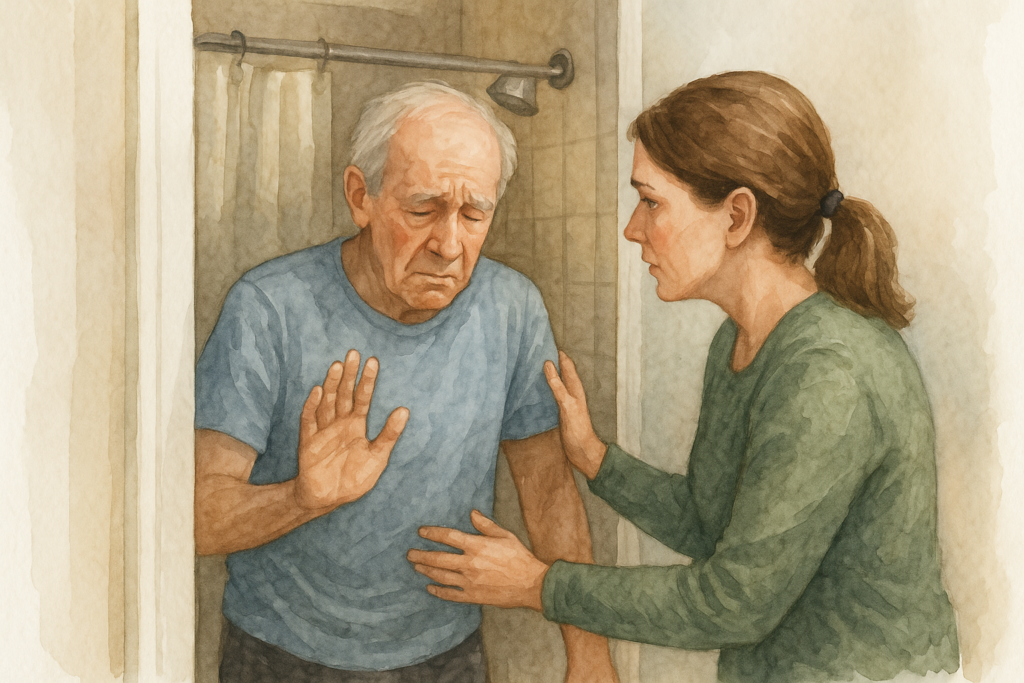
There comes a point when insisting on a shower causes more harm than skipping it.
That’s not neglect. That’s compassionate adaptation.
A Hospice Nurse’s Final Reassurance
You are not failing. You are adjusting to a body that no longer works the way it once did.
Love at this stage often looks like letting go of expectations and choosing kindness over control.
Caring for the body with dignity. Honoring comfort. Trusting God with the rest.
You are doing an amazing job, please give yourself grace today.

If you’d like suggestions for products I’ve used and seen work well, or ideas that make bathing easier when showers are difficult, I’ve shared them on my Products I Love page. I also have an article in Caregiver’s Corner about Getting Urine Smells Out Of Everything.
I hope this article brought you some clarity or comfort. Caring for someone at the end of life can feel overwhelming, and you don’t have to figure it all out alone.
If you’re feeling unsure what to do next, my Free Resources page offers simple guides and tools that many families find helpful as they navigate this season. You can also sign up for my once-weekly emails no spam, no pressure. Just gentle support and education.
If you need additional support, or simply need a place to ask a question or vent, you’re welcome to leave a comment or send me an email. You’re not doing this wrong, and you’re not alone.