This article is part three in a four-part series that explains hospice in a clear, simple way—what it is, what it isn’t, what visits look like, what families often don’t realize, and what happens after death. My hope is that this gives you clarity and confidence as you navigate this season.
Read Part One “What Hospice Is and Isn’t” here
Families often come into hospice with understandable fear, confusion, or things they’ve heard from friends and relatives. Many of those assumptions come from older versions of hospice — things that were true 30 years ago but aren’t true today.
As a hospice nurse, these are the things I hear over and over again — the things families wish they had known sooner, and the truths that bring relief once they’re finally explained.
Hospice is Not Just for the Last Days
Most people start hospice far too late because they think it’s only for the final 24–72 hours.
In reality, hospice can support patients for months, not just days. Starting earlier gives families more:
- teaching
- support
- symptom control
- time to prepare
- peaceful moments together
Waiting until the very end robs families of the help they could have had.
Hospice Does NOT Mean “Giving Up”
Choosing hospice does not mean choosing death.
It means choosing comfort, dignity, and quality of life.
Families are often surprised to learn:
- many patients live longer with hospice
- the home becomes calmer
- symptoms improve
- families feel more confident and supported
Hospice is not withdrawing care — it’s shifting the type of care.
You Can Leave Hospice at Any Time
If you want to try treatment again or feel hospice isn’t the right fit, you can revoke services immediately. There is no penalty, no waiting period, and no pressure.
You are never locked in.
You’re in complete control.
Visits Increase as Needs Change
Many families think they’re “limited” to a certain number of visits per week.
That is not true.
If your loved one begins to decline, changes suddenly, or needs more support:
- visits increase
- medications are adjusted
- the nurse will come more often
- the team responds quickly
Hospice adapts to the patient — not the other way around.
Hospice Provides Equipment and Supplies (at No Cost)
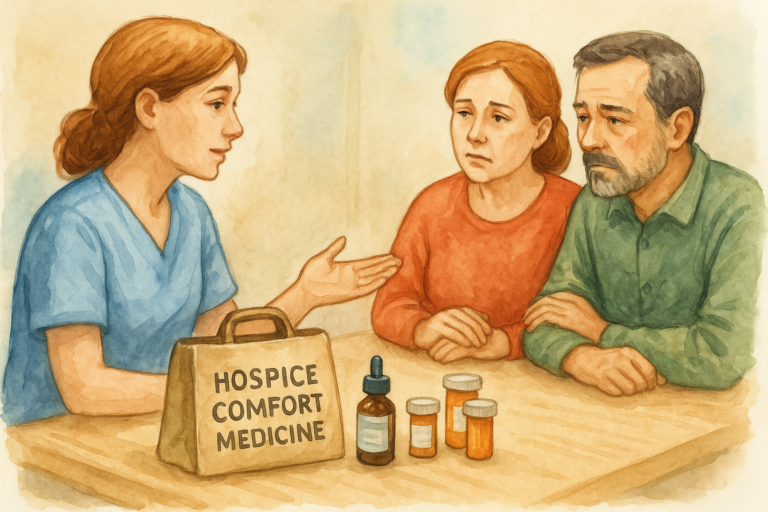
Hospital beds, oxygen, walkers, bedside commodes, briefs, pads, wipes, and comfort medications are delivered to the home and replaced as needed.
This support is meant to relieve some of the financial and caregiving burden so families aren’t running to stores in the middle of the night.
Your Primary Doctor Can Still Be Involved
You do not have to “give up” your loved one’s primary doctor.
They may choose to stay involved in the care plan if you want them to. Some families prefer to switch to the hospice doctor because they specialize in comfort and symptom management.
Both options are correct — the choice is yours.
Hospice Does NOT Take Over Your Home
A very common fear is:
“Hospice will come in and take over.”
But hospice does not run your home or make decisions without permission.
Your family remains in control.
You decide what care looks like.
Hospice is a partner — not the boss.
Hospice Does NOT Provide 24/7 Care
Another misconception is that hospice provides full-time, daily caregiving.
Hospice supports and teaches families, but:
- daily care is done by the family or hired caregivers
- hospice aides visit a few times a week
- nurses visit 1–3 times weekly (more if needed)
The goal is to empower your family — not replace you.
Hospice Supports the Entire Family
Hospice isn’t only for the patient.
It’s also for:
- caregivers
- spouses
- children
- grandchildren
- extended family
- anyone grieving
Support includes teaching, emotional support, spiritual support, help with paperwork, and guidance through every stage of decline.
Families often say they were surprised by how supported they felt.
You Can Call Hospice Anytime — Day or Night
You never have to guess if something is “serious enough” to call.
If you’re worried, confused, or something feels different:
Call.
There is always a nurse available 24/7 to help talk you through what you’re seeing and come to the home if needed.
You are never alone in this.
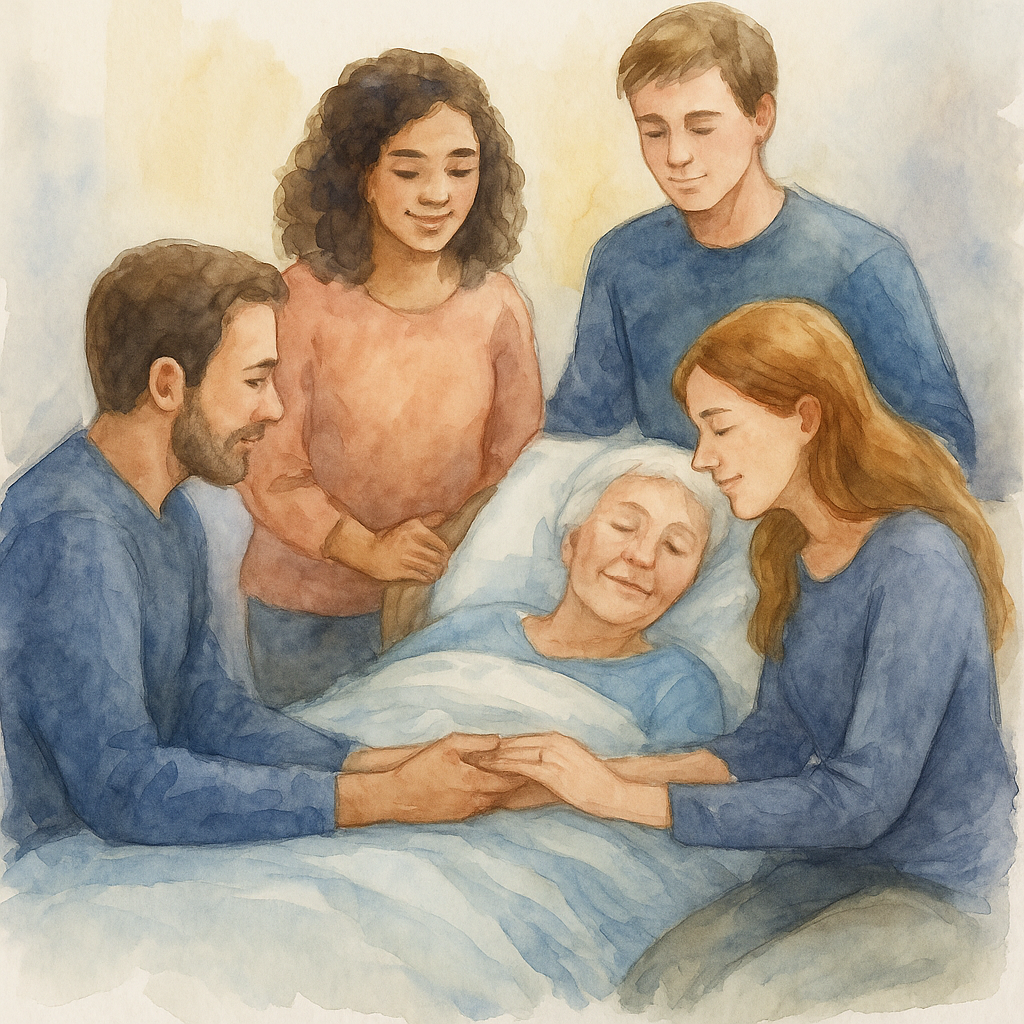
A Few Last Thoughts Before You Go
So many families tell me they wish they had known these things sooner. My hope is that this helped bring clarity, peace, and a sense of steadiness as you care for your loved one. Remember — you are not walking this path alone.
In Part 4, we’ll talk about what happens after your loved one passes: the gentle steps your nurse takes, the care your family receives, and the way hospice continues to walk with you during the first year of grief.
Now it’s time for part four. What happens after Death

I hope this article brought you some clarity or comfort. Caring for someone at the end of life can feel overwhelming, and you don’t have to figure it all out alone.
If you’re feeling unsure what to do next, my Free Resources page offers simple guides and tools that many families find helpful as they navigate this season. You can also sign up for my once-weekly emails no spam, no pressure. Just gentle support and education.
If you need additional support, or simply need a place to ask a question or vent, you’re welcome to leave a comment or send me an email. You’re not doing this wrong, and you’re not alone.