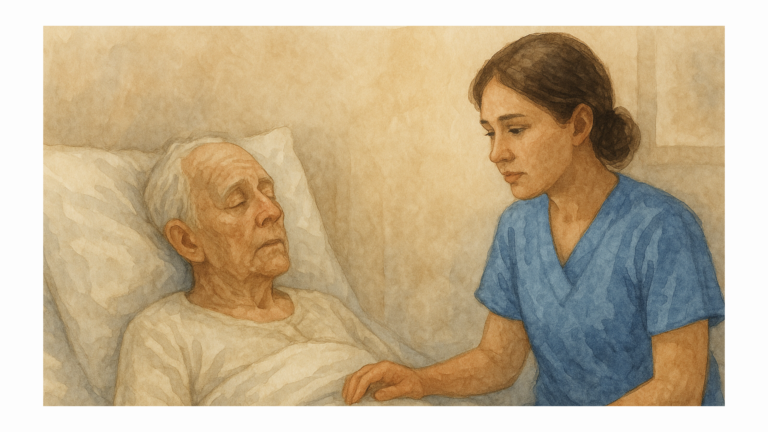
When someone we love is nearing the end of life, one of the first things families worry about is food.
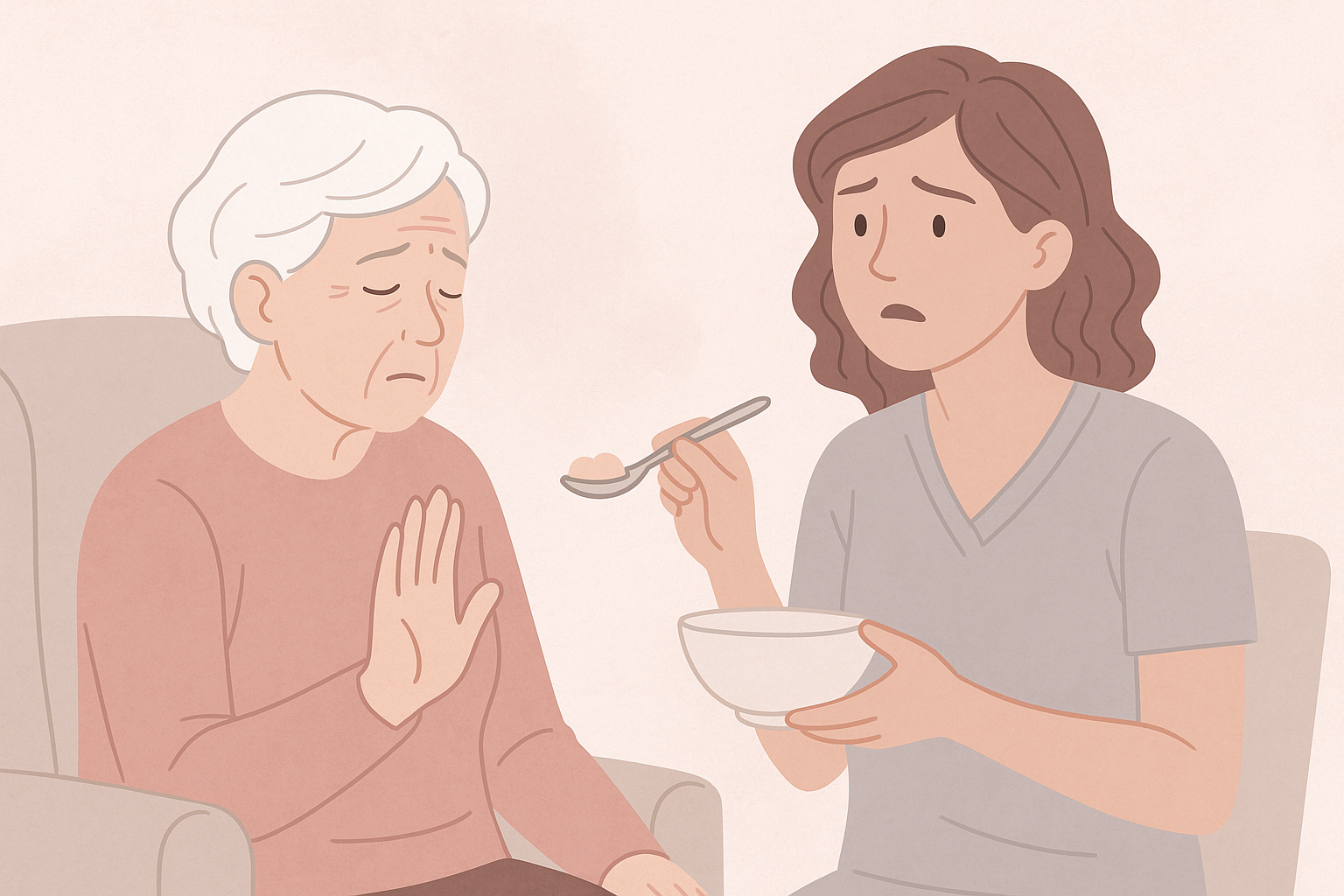
“She’s not eating, she’s going to starve, I don’t want her to be hungry”
“He only drinks a few sips a day. He is going to get dehydrated? Should we make him drink more?”
As a nurse of over 22 years, I’ve heard these questions at almost every bedside — and I understand the fear behind them. Eating and drinking feel like love. They feel like care. When someone stops, it can feel like you’re losing them twice.
But here’s the truth: a natural decline in eating and drinking is one of the gentlest, most peaceful parts of the body’s God-designed transition into Heaven.
Let’s walk through this together with grace, compassion, and clarity.
Loss of Appetite Is a Natural Part of Dying — Not Starvation
As the body slows down, it no longer needs fuel the way it once did. Digestion takes energy, and the body is conserving every bit of strength. The loss of appetite is not painful, and it is not suffering. It is the body gently shutting down — the same way a candle slowly dims before going out.
If your loved one isn’t asking for food, it means their body doesn’t desire it. You aren’t harming them by honoring that. You are respecting the wisdom God placed inside the human body.
Forcing Food Can Cause More Harm
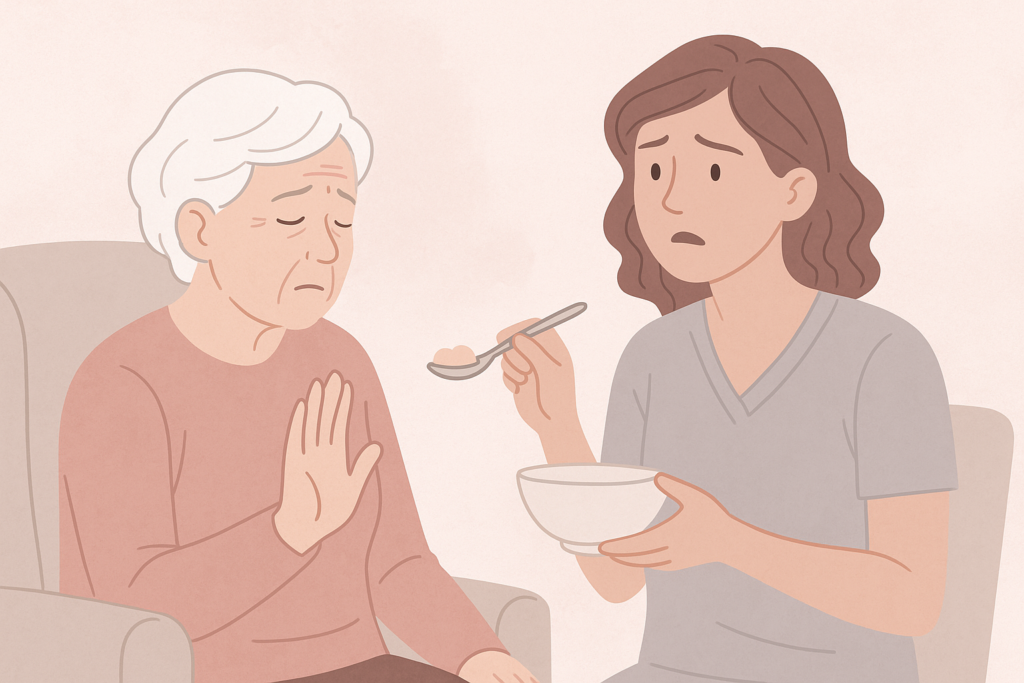
Families often try to encourage “just a few more bites,” but at this stage the stomach and bowels have slowed significantly. Forcing food or drink can lead to choking, nausea, vomiting, aspiration, or increased discomfort and agitation.
Peace comes from allowing the body to do what it is naturally doing.
Small Sips and Comfort Foods Are Enough
If your loved one is still awake and occasionally hungry, offer:
- ice chips
- sips of water
- popsicles
- spoonfuls of pudding or applesauce
- favorite soft foods
- swabs dipped in water to keep their mouth moist
These tiny gestures feel like love — and they are love — but there’s no need to make them eat more than they ask for.
Dehydration Near the End of Life Is Not Painful
This is one of the hardest truths for families to accept. We are taught that dehydration is dangerous — and it is for healthy people. But at the end of life, gentle dehydration actually brings comfort. It reduces swelling, decreases secretions, eases breathing, reduces nausea, and naturally allows the body to relax.
IV fluids often do the opposite of what families hope; they can prolong the dying process and increase discomfort.
Your Presence Is More Important Than Any Meal
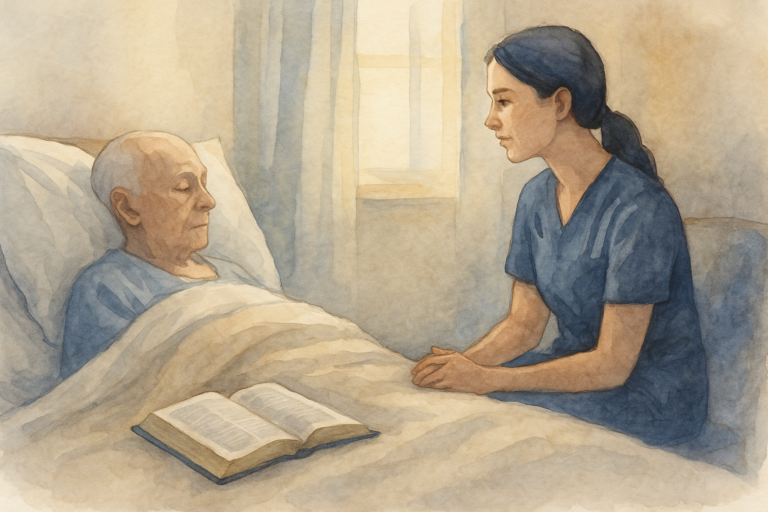
Instead of focusing on the plate, focus on the person. Hold their hand. Put on their favorite music. Read Scripture. Pray softly. Talk about memories. Brush their hair. Moisturize their lips. Sit quietly beside them.
They may not ask for food, but they still hunger for love, comfort, and connection.
This is holy ground.
This is where love becomes presence.
What to Say When Family Members Disagree
Sometimes you may be the only one who understands what’s happening, while others feel panicked or afraid. You can gently say:
“Her body isn’t processing food the same way anymore.”
“He’s not suffering — he simply doesn’t feel hunger.”
“At this stage, food may make them uncomfortable.”
“Let’s give them what they ask for and focus on comfort.”
These words calm families and prevent guilt later.
Faith Perspective: God Feeds the Spirit When the Body No Longer Needs Food
A Faith Perspective: God Feeds the Spirit When the Body No Longer Needs Food
When earthly hunger fades, spiritual hunger rises. Scripture reminds us, “My flesh and my heart may fail, but God is the strength of my heart and my portion forever.” At the end of life, the body needs less — but the soul needs more. More peace. More reassurance. More presence.
Feeding the soul becomes the priority.
A Final Word
If you’re walking through this right now, hear this with all the love in my heart: You are not starving your loved one. You are supporting their natural, peaceful transition. You are doing everything right.
God meets us tenderly in these final days.
And so do the people who love us.
You are not alone.
And your presence is the most powerful gift you can give.

I hope this article brought you some clarity or comfort. Caring for someone at the end of life can feel overwhelming, and you don’t have to figure it all out alone.
If you’re feeling unsure what to do next, my Free Resources page offers simple guides and tools that many families find helpful as they navigate this season. You can also sign up for my once-weekly emails no spam, no pressure. Just gentle support and education.
If you need additional support, or simply need a place to ask a question or vent, you’re welcome to leave a comment or send me an email. You’re not doing this wrong, and you’re not alone.