A Hospice Nurse Explains What Caregivers Are Seeing
Why won’t they answer me anymore?
When a dying loved one stops talking, it is usually a normal physical change at the end of life. As the body weakens, it conserves energy, and speaking becomes too exhausting. This silence does not mean emotional withdrawal or lack of awareness — many people can still hear and feel comforted by familiar voices.
When a dying loved one stops talking, it can feel sudden and deeply painful.
Conversation fades. Responses become shorter. Then one day, the words are gone. Caregivers sit at the bedside wondering if they said something wrong, waited too long, or somehow lost connection.
Silence can feel like rejection.
Like withdrawal.
Like suffering you can’t fix.
Let me reassure you clearly:
Loss of speech at the end of life is a normal physical change. It is not personal. And it does not mean your loved one has disconnected from you.
In most cases, when someone is not talking near the end of life, it’s because the body is conserving energy — not because awareness, love, or connection are gone.
Understanding what’s happening can ease fear and help you stay present without feeling like you’re doing something wrong.
Before we talk about why speech fades, it helps to name what families usually notice first.
What Caregivers Are Noticing When Talking Fades
When a loved one is not talking at the end of life, the change often happens in small steps.
Caregivers usually notice it before anyone else.
At first, responses may become shorter or quieter. Words come more slowly. There may be long pauses before an answer — or answers that don’t quite make sense. Over time, your loved one may stop initiating conversation altogether.
When a loved one isn’t talking anymore, caregivers often notice:
- very quiet or whispered responses
- long pauses before answering
- loss of words or unfinished sentences
- appearing asleep but briefly opening eyes
- no verbal response despite seeming aware
These changes can feel sudden, but they usually reflect a gradual loss of energy and processing ability.
It’s common for caregivers to ask themselves, “Is this normal?” or “Did I miss something?”
Yes — this is a recognized part of the dying process. And no — you didn’t cause it.
To understand why a dying person stops talking, it helps to look at how much effort speech actually requires from the body.
Why Talking Becomes Hard Near the End of Life
Talking takes much more energy than most people realize.
To speak, the brain has to process language, form thoughts, coordinate muscles, and push air through weakened lungs. Near the end of life, that level of effort often becomes too much.
As the body weakens, it begins conserving energy for the most basic functions. The brain slows. Oxygen levels may drop. Muscles in the mouth, throat, and chest tire easily. What once felt automatic now requires work.
This is why a dying person may hear you but not respond.
Silence is usually not a choice. It’s not avoidance. It’s the body prioritizing rest over speech.
Many caregivers assume that if someone can’t talk, they must not be aware. In reality, awareness and the ability to communicate often fade at very different speeds.
Here’s an important truth to hold onto:
Silence doesn’t mean absence — it usually means the body is resting.
Your loved one may still recognize your voice, feel your presence, and register reassurance, even when words are no longer possible. Because this change feels so personal, caregivers often fear it means something emotionally painful. Let’s address what this silence does not mean.
What This Silence Does Not Mean
When a loved one stops talking, caregivers often fill the silence with fear.
They replay conversations. They wonder if they said the wrong thing. They worry the quiet means pain, anger, or withdrawal.
It’s important to say this clearly:
This silence is not emotional rejection.
Your loved one is not ignoring you.
They are not upset with you.
They are not choosing to shut you out.
They did not stop talking because of something you said — or didn’t say.
This change is not a sign that love has faded or connection has been lost. It is not an indication that they no longer care, recognize you, or want you near.
And silence does not automatically mean suffering.
While discomfort is always something hospice watches closely, the inability to speak by itself is a physical change — not proof of distress.
Caregivers often carry an unspoken fear that this quiet means they’ve missed their chance. In most cases, that isn’t true. Connection does not disappear when words do.
One of the most common questions families ask at this stage is whether their loved one can still hear them. That answer brings a great deal of comfort.
Can They Still Hear You?
This is the question families ask most often when a loved one stops talking.
Hearing is often one of the last senses to fade at the end of life. Even when a person can no longer speak or respond, they may still recognize voices and feel comforted by familiar sounds.
Even when someone can no longer speak, open their eyes, or respond, they may still recognize voices and register sound. Hospice nurses see this often. Families notice a flicker of awareness, a subtle change in breathing, or a brief eye movement when they speak.
That’s because the ability to respond and the ability to hear are not the same thing.
When a dying person is not talking, it usually means the body no longer has the energy to form words — not that awareness is gone.
This is why what you say still matters. Tell them they are safe. Speak gently. Say their name. Tell them they are loved. Offer reassurance. Tell them it’s okay to rest.
You don’t need to search for perfect words. Your familiar voice, your tone, and your presence often bring more comfort than anything else.
Even in silence, connection remains. As words fade, many caregivers worry they won’t know how to communicate anymore. The truth is, connection doesn’t require conversation.
How to Communicate When Words Are Gone
When a loved one stops talking, caregivers often feel lost.
Conversation has always been the way we connect. So when words disappear, it can feel like the relationship has changed — or ended.
It hasn’t.
Connection simply looks different now.
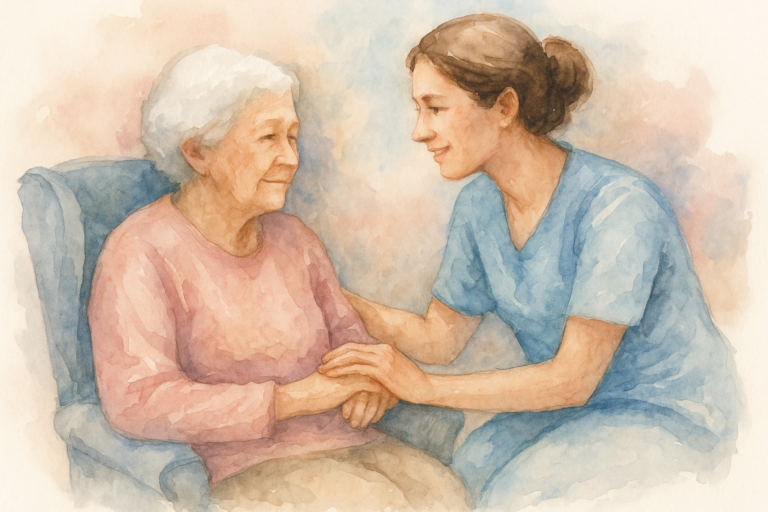
Gentle touch can say what words no longer can, if it feels comforting to them. Sitting quietly at the bedside, holding a hand, or resting your hand on their arm can be grounding and reassuring.
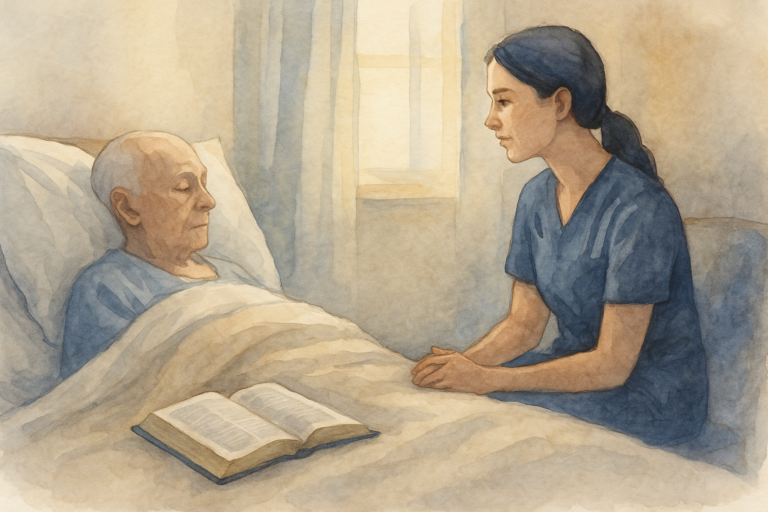
Soft music, familiar prayers, or favorite readings can bring comfort without requiring a response. Many families find that reading aloud — even when there’s no reply — creates a sense of closeness and peace.
It’s also important to continue talking to your loved one, not about them. Speak as if they can hear you, because often they can. Share reassurance. Express love. Say the things that matter to you.
And remember this:
Silence can still be connection.
You don’t need to fill the room with words. Presence, calm, and consistency often bring more comfort than conversation ever could. Because this stage is emotionally charged, caregivers sometimes respond in ways that come from love — but can unintentionally cause distress. Let’s talk about what to avoid.
What Not to Do When Words Are Gone
When a loved one stops talking, caregivers often respond from desperation.
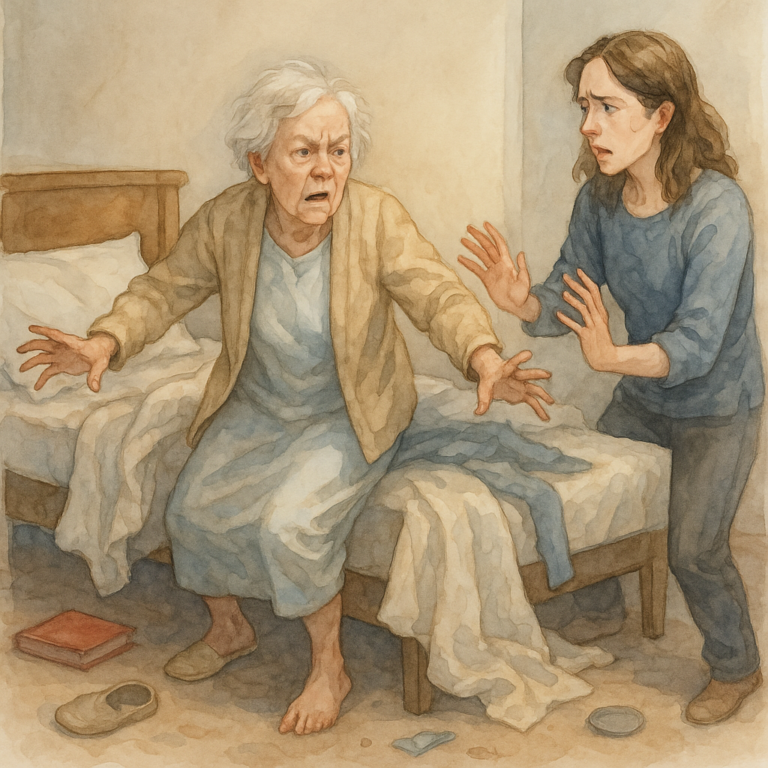
They beg, plead, and they lean close and say, “Just say something.”
Sometimes family members call on the phone, becoming upset or frantic when their loved one doesn’t respond, raising their voice or asking the bedside caregiver to “make them answer.”
All of this comes from love. But it can unintentionally increase distress.
Try not to demand responses or pressure your loved one to speak. Talking takes energy their body no longer has, and being asked repeatedly to respond can create strain rather than comfort.
Avoid quizzing or testing them. Questions like “Do you know who I am?” or “Can you hear me?” are usually asked out of fear, but they place a burden on someone who cannot answer.
It’s also important not to interpret silence as suffering or rejection. The absence of words does not mean something is wrong or unresolved.
If family members are upset that their loved one isn’t responding on the phone, it can help to gently explain that this is a physical change — not a choice — and that hearing may still be present even when speech is not.
These instincts are understandable. They come from love and grief happening at the same time.
What helps most is shifting from asking for words to offering reassurance.

When to Call Hospice or the Nurse
Caregivers often hesitate to call hospice when a loved one stops talking.
Please hear this clearly:
You never need to wait for silence to turn into fear before asking for help.
You should call hospice or the nurse if:
- your loved one becomes suddenly much less responsive
- speech stops quickly or unexpectedly
- silence is accompanied by new agitation, restlessness, or distress
- you’re unsure whether what you’re seeing is normal
- you feel anxious, overwhelmed, or afraid
Sometimes silence is simply part of the natural progression. Other times, it can signal discomfort, medication changes, or a need for additional support.
Hospice nurses are trained to sort out the difference.
They can assess comfort, adjust medications if needed, and help you understand what to expect next. Often, a single conversation brings enormous relief — even if no immediate changes are required.
And just as important, caregivers need reassurance too.
If your heart feels heavy or your confidence is shaken, that alone is reason enough to call.
Asking for guidance is exactly what you are supposed to do.
You are not expected to understand end-of-life changes on your own. That is why you have a hospice team.
You are not overreacting.
That is what we are here for.
A Faith-Centered Reassurance
For families of faith, silence at the end of life can feel especially heavy.
Words have always been how we pray, bless, forgive, and say goodbye. When those words are no longer spoken back, it can feel like something sacred has been lost.
It hasn’t.
There is deep peace in quiet moments. Scripture reminds us that God is present not only in sound, but in stillness.
When the body grows quiet, it is often resting in a way it no longer can through words. That rest is not abandonment. It is part of a gentle transition.
If prayer brings comfort, speak it softly. If familiar verses bring peace, read them aloud. If silence feels right, let it be holy.
God’s presence does not depend on conversation.
Love, prayer, and peace are still being felt — even when words are gone.
Conclusion
When a loved one stops talking, it can feel like losing them twice.
The silence is heavy. The questions are constant. And caregivers often carry a quiet fear that they’ve missed their chance to connect. Silence at the end of life does not mean rejection, anger, or suffering. It usually means the body is resting and conserving energy as it slows down. Connection can still exist without conversation.
This change is not something you caused, and it is not something you need to fix. It is part of the body’s natural slowing — not a withdrawal of love.
You are doing this right.
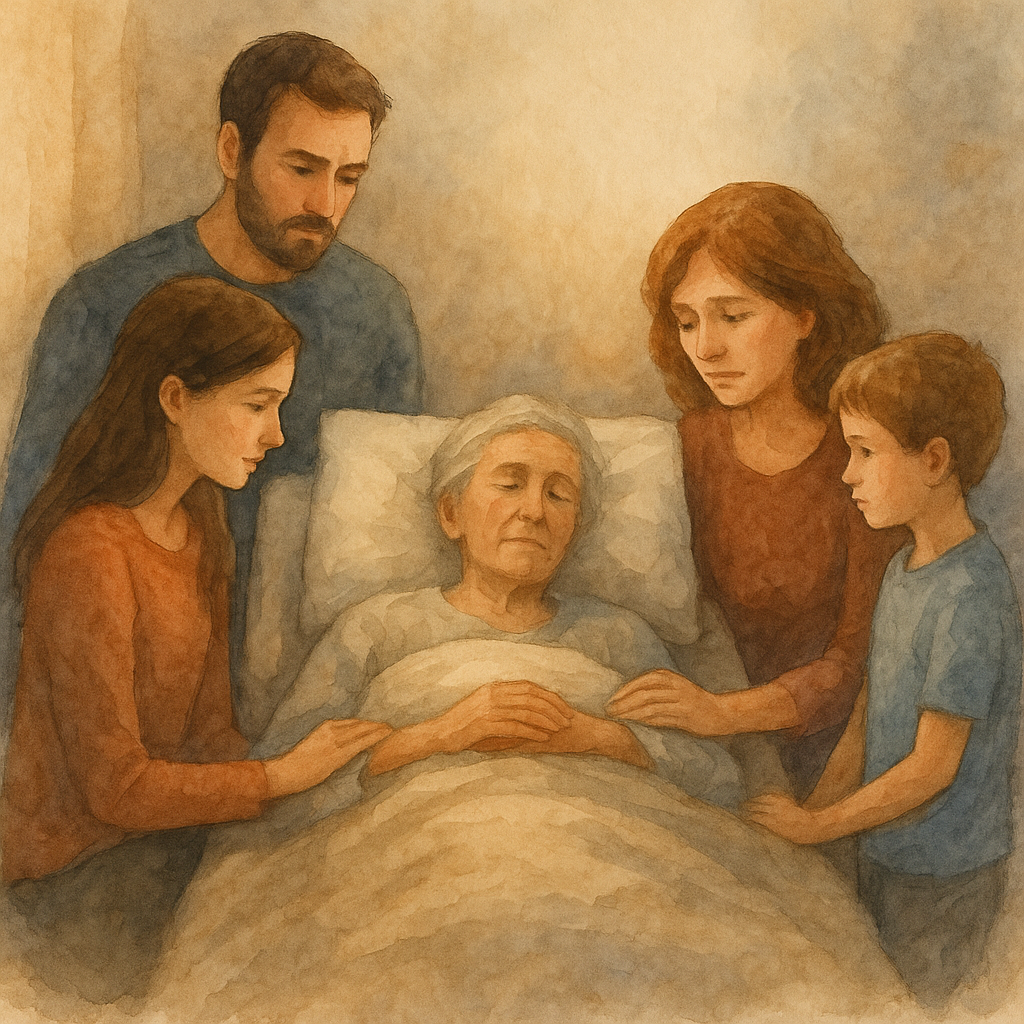
Every gentle word, every quiet moment, every steady presence is a gift. Even without conversation, love is still being felt.
And you are not alone in this.

I hope this article brought you some clarity or comfort. Caring for someone at the end of life can feel overwhelming, and you don’t have to figure it all out alone.
If you’re feeling unsure what to do next, my Free Resources page offers simple guides and tools that many families find helpful as they navigate this season. You can also sign up for my once-weekly emails no spam, no pressure. Just gentle support and education.
If you need additional support, or simply need a place to ask a question or vent, you’re welcome to leave a comment or send me an email. You’re not doing this wrong, and you’re not alone.
Frequently Asked Questions
Yes. Loss of speech is a normal physical change near the end of life. As the body weakens and energy is conserved, talking often becomes too exhausting.
No. Silence does not automatically mean pain, distress, or emotional withdrawal. In most cases, it reflects physical decline, not suffering or rejection.
Often, yes. Hearing is frequently one of the last senses to fade, and many people can still register voices even when they can no longer respond.
Awareness and the ability to speak fade at different rates. A person may hear you and recognize your voice but lack the energy or coordination needed to respond.
It’s best not to pressure them to respond. Instead, speak gently, offer reassurance, and allow silence to be part of the connection.
You should call hospice if the change is sudden, accompanied by distress or agitation, or if you feel uncertain or overwhelmed. Asking for guidance is appropriate and encouraged.