When someone you love is nearing the end of life, the changes you see can feel overwhelming. But I want to gently reassure you of something that may bring you deep comfort:
God designed the dying process to be peaceful.
Your loved one is not suffering.
What you are witnessing is the body doing exactly what God created it to do.
As a hospice nurse, I’ve had the honor of walking hundreds of families through this sacred transition. And time after time, I see the same truth:
Death is far gentler than it looks.
Let me walk you through what’s actually happening—and where God is in it all.
Death Was Not Designed to Be Terrifying
Most fear comes from the unknown. Death looks frightening because we’re not used to seeing it. But biblically and medically, death is not chaotic. It’s not violent. It’s not a spiritual punishment.
Death is a transition.
A doorway.
A movement from one home to another.
And God is present in every step.
Death as a Transition, Not an Ending
Scripture tells us:
“To be absent from the body is to be present with the Lord.” — 2 Corinthians 5:8
God designed the soul’s transition to be gentle. Death is not the moment someone “loses”—it’s the moment they are received. Jesus told us that He prepares a place for us and comes personally for His children (John 14:2–3).
He does not leave anyone to walk that final moment alone.
How God Designed the Body to Shut Down Peacefully
Let’s talk about the physical changes that frighten families the most—and why they are actually signs of peace, not suffering.
1. Less Eating and Drinking
This is not starvation.
This is God’s design.
The body turns inward, conserving energy for essential functions. Your loved one does not feel hunger or thirst the way they used to.
2. More Sleeping and Unresponsiveness
This is one of the most peaceful parts of dying.
The brain shifts into a protected, dream-like state.
It is not a coma and not suffering—it’s a gentle pulling away from the physical world.
3. Breathing Changes
These patterns look dramatic but are painless.
The brainstem takes over—God’s built-in autopilot.
Long pauses, irregular breaths, or “Cheyne-Stokes” breathing are all normal signs of a peaceful, natural decline.
4. Cool Hands and Feet
Circulation begins focusing on vital organs.
Your loved one is not uncomfortable—they don’t experience cold the way we do.
5. Eyes Opening or Staring
This is neurological, not emotional.
They are not afraid.
They are not in distress.
It is simply the brain releasing control.
The Soul’s Nearness to Heaven
There is often a shift in the room in the final days or hours.
The atmosphere softens.
The room feels calmer.
Sometimes there is a holy quiet.
Many families tell me, “It feels like heaven is close.”
I believe they’re right.
Some people see loved ones who’ve passed.
Some talk about light.
Some say they see Jesus.
Some smile peacefully.
These are not hallucinations.
These are spiritual moments.
Where God Is During the Dying Process
God does not disappear when someone is dying.
He draws nearer.
He comforts.
He carries.
He guides.
He receives.
“The Lord is close to the brokenhearted.” — Psalm 34:18
“Even though I walk through the valley of the shadow of death, you are with me.” — Psalm 23:4
Your loved one is not walking that valley alone.
God Himself leads them home.
What Looks Like Suffering… But Isn’t
Here are the signs families often misunderstand:
- gurgling or rattling sounds (not drowning)
- moaning or sighing (usually reflexive)
- reaching or picking at the air (neurological)
- long pauses between breaths
- eyes half open
I want to say this as clearly as possible:
These signs do not mean your loved one is suffering.
They are part of the peaceful shutdown God designed.
The Gift of a Peaceful Death
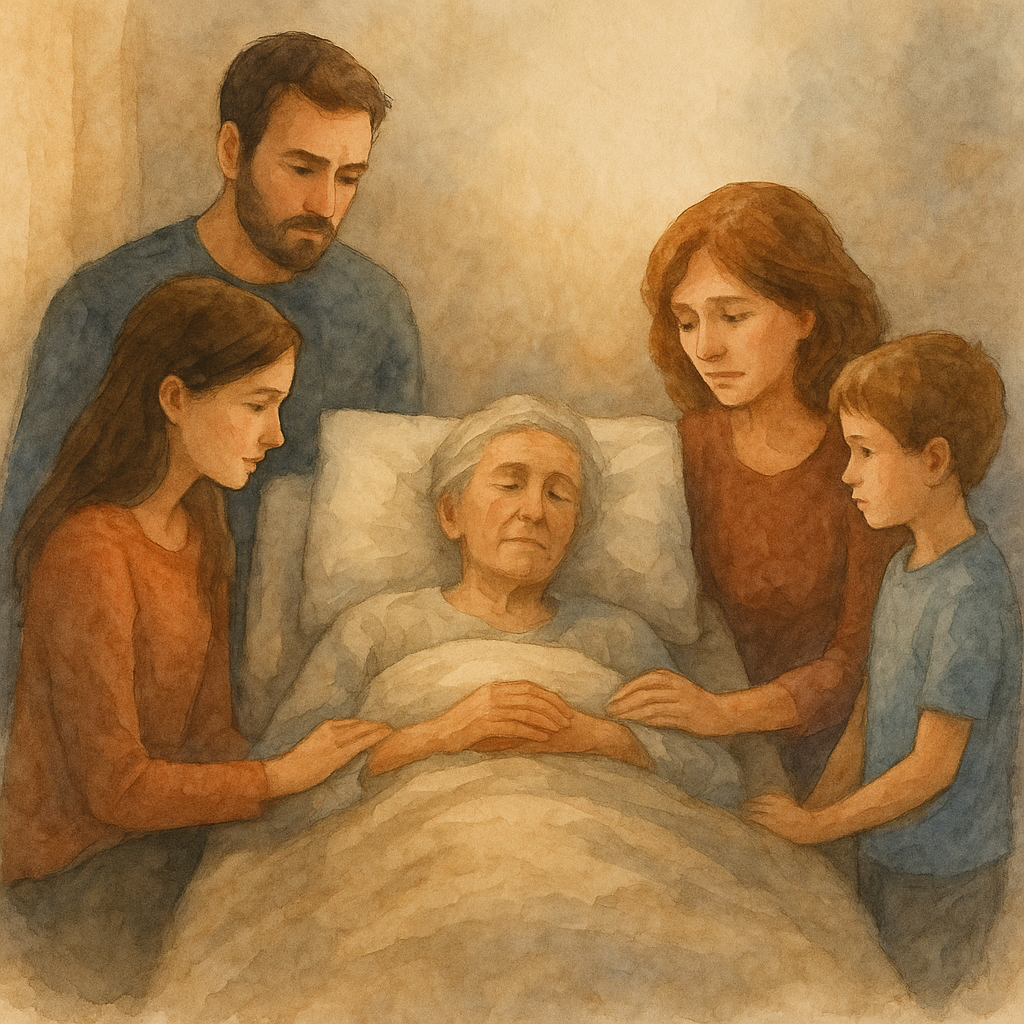
In the final hours and minutes, something beautiful often happens:
- families gather
- old wounds soften
- love becomes simple and pure
- the room grows still
- peace becomes almost tangible
Death is not the enemy for the believer.
It is the homecoming.
A Nurse’s Final Reassurance
Your loved one is safe.
They are not suffering.
They are being held—both by you and by God.
What you’re seeing may feel heavy, but the experience your loved one is having is often peaceful, calm, and filled with God’s quiet presence.
A Prayer for Those Who Are Letting Go
Lord, bring Your peace into this room. Comfort this family with Your nearness. Hold their loved one gently as You lead them home. Replace fear with peace and sorrow with Your presence. Amen.

I hope this article brought you some clarity or comfort. Caring for someone at the end of life can feel overwhelming, and you don’t have to figure it all out alone.
If you’re feeling unsure what to do next, my Free Resources page offers simple guides and tools that many families find helpful as they navigate this season. You can also sign up for my once-weekly emails no spam, no pressure. Just gentle support and education.
If you need additional support, or simply need a place to ask a question or vent, you’re welcome to leave a comment or send me an email. You’re not doing this wrong, and you’re not alone.
Common FAQ
Most people do not experience pain during the natural dying process. The body shuts down gradually, and comfort is usually maintained, especially with hospice care.
The body begins conserving energy and focusing on essential functions. This is a natural, peaceful process designed to protect the person as life comes to a close
For most people, dying is far gentler than it appears. Many changes that worry families are normal signs of the body slowing down, not signs of suffering.
Many families find comfort in believing that God draws near during the dying process, offering peace, presence, and guidance in the final transition.