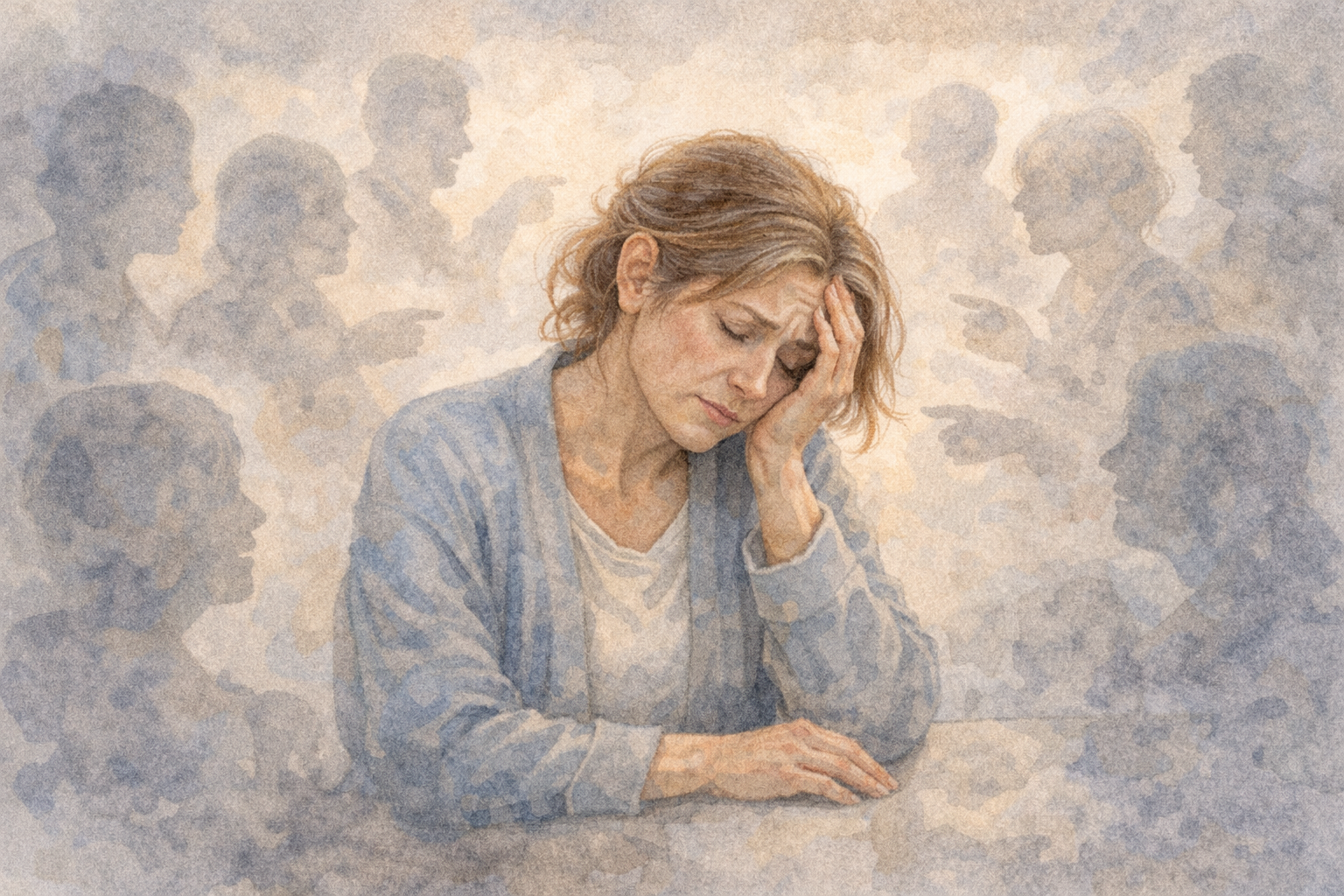
Family pressure can introduce guilt that does not belong to you.
When family criticizes your caregiving decisions, it can introduce doubt even when you are carrying the full responsibility alone.
They do not have the right to tell you what to do.
It is very easy, from the outside looking in, to say,
“I would never put my mother in a nursing home. I would never do that.”
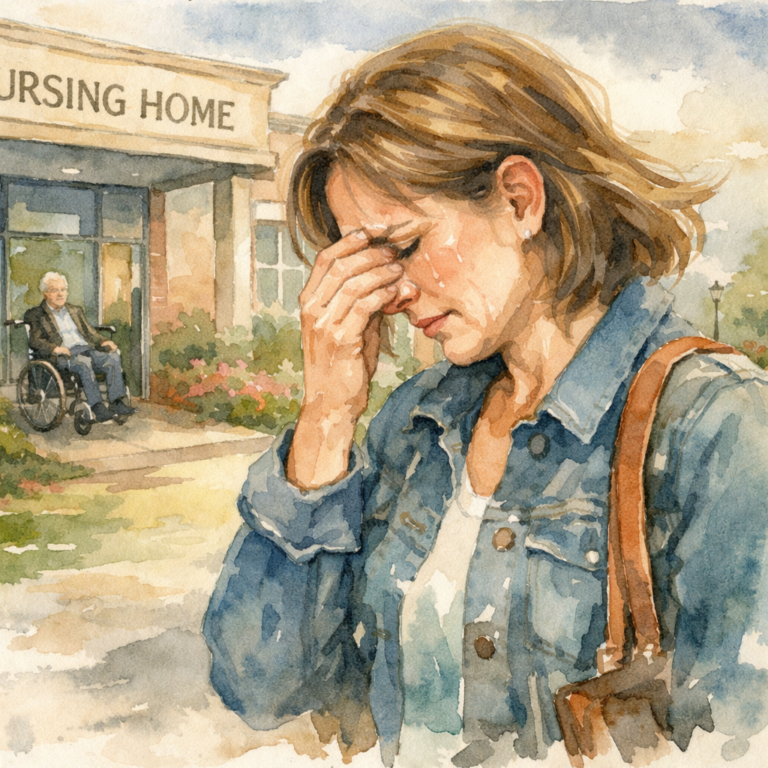
Those words are spoken from a distance. Intense caregiver guilt after nursing home placement often grows louder when those opinions come from family, friends, or church communities.
They are not coming from the person at home with a bed-bound or confused loved one.
They are not spoken by the person listening to screaming, yelling, or calling out through the night.
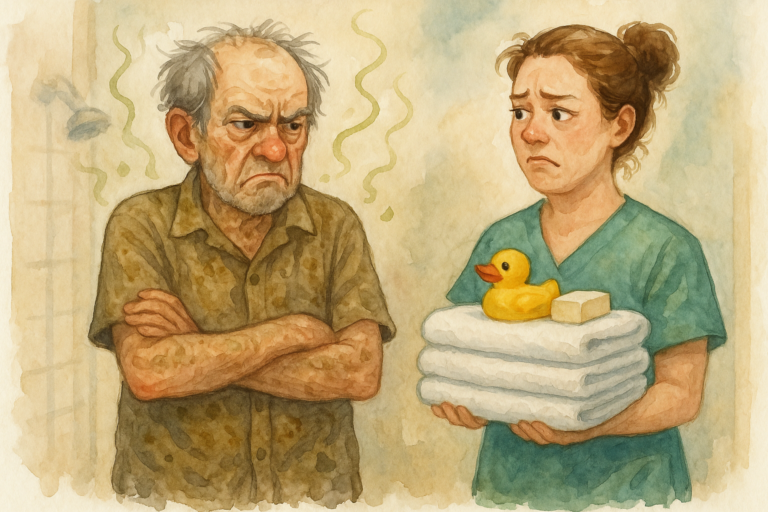
They are not said by the one chasing someone who wanders, cleaning up messes, or managing escalating behaviors.
They are also not coming from the person trying to hold together a marriage, children or grandchildren, a job, and an ill loved one at the same time.
Outside voices do not live inside the daily reality of caregiving.
But they still speak with confidence. And when those opinions are repeated, they begin to carry weight they do not deserve.
No one has the right to pressure you to bring someone home.
No one has the right to guilt you.
Care decisions belong to the person carrying the responsibility, the risk, and the consequences.
Authority does not come from opinion. It comes from doing the care.
As a hospice nurse, I have watched families carry enormous responsibility while others offer confident opinions from a distance.
Why Family Criticism Does Not Equal Authority
The people offering opinions are not the ones doing the care.
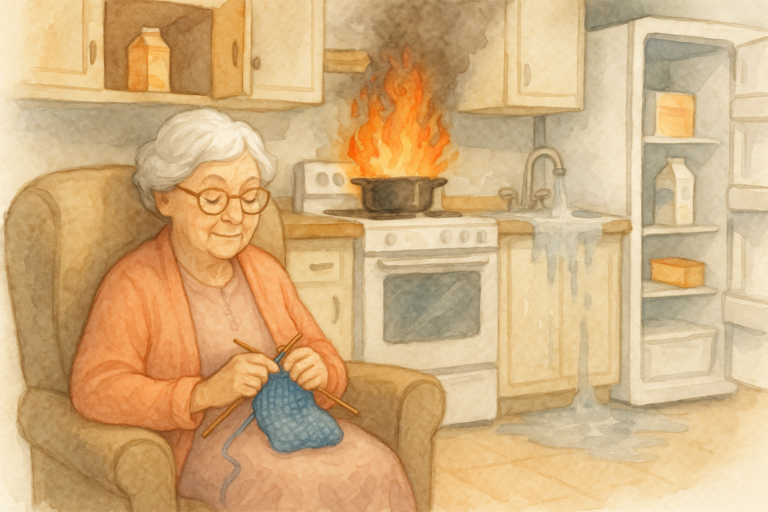
They are not managing medications or supervising overnight confusion.
They are not preventing falls or responding to agitation.
They are not absorbing the physical and emotional cost of what this actually requires.
They do not get up in the night.
They do not clean up messes.
They do not live with the consequences if something goes wrong.
Opinion does not equal responsibility.
Authority belongs to the person carrying the risk.
What Outside Voices Are Not Living With
Many caregivers struggle with what to do when family members criticize nursing home placement or question complex care decisions. The criticism often creates guilt that feels moral, even when the decision was grounded in safety and necessity.
Outside voices are not living with the daily realities of caregiving. They are not managing incontinence and hygiene, tracking medication timing and safety, or handling mobility and transfers that carry real risk. They are not responding to behavioral symptoms that escalate without warning or trying to keep someone safe through confusion and agitation.
These unseen realities are why family pressure around caregiving decisions can cause deep and unnecessary guilt.
They are also not living with disrupted sleep. They are not waking repeatedly through the night to redirect, reassure, or prevent injury. They are not carrying the cumulative exhaustion that comes from being on alert at all times.
These are not hypothetical concerns or rare situations. They are ongoing care demands that shape every decision a caregiver makes.
One caregiver put it this way:
“Caregiving with little to no support destroys people and fosters resentment. I’m not my own person anymore.”
This is the reality outside voices do not see. And it is the reality that forces decisions, whether anyone approves of them or not.
How Outside Voices Introduce Guilt
Guilt is often introduced through comments that sound reasonable or even caring on the surface.
“If it were me…” “I could never…” “He’d be better at home.”
These statements are rarely spoken by people involved in the daily work of caregiving, but they carry moral weight anyway. This is how caregiver guilt after nursing home placement is often introduced, not through the care itself, but through judgment from the outside.
They shift responsibility without offering help. They place an idealized version of caregiving onto someone already managing a complex and demanding reality. The message underneath is not advice. It is judgment. It suggests that a different choice would be more loving, more faithful, or more virtuous, without acknowledging what that choice would actually require.
These comments also ignore clinical reality. They overlook disease progression, safety risks, caregiver injury, and the limits of one person’s body and nervous system. They compare an imagined version of care to the real, exhausting version happening day after day.
This is how guilt takes root. Not because the caregiver made a careless decision, but because outside voices introduce doubt without context or responsibility.
I hear this guilt spoken plainly by caregivers who are already at their limit:
“I feel guilty I have him in there when he wants to be home. We can’t afford 24/7 care, but he needs it.”
This is not indifference. This is reality colliding with love. It reflects a situation many families face after placing a loved one in a nursing home, not a lack of love or effort. Guilt grows when outsiders reduce complex care decisions to moral judgments.
Who Actually Carries the Risk
When family criticizes your caregiving decisions, remember this. Authority belongs to the person carrying the responsibility and the risk.
The caregiver is the one managing the real risk. That includes patient safety, caregiver injury, medication errors, and mistakes that happen when exhaustion becomes chronic. These are not abstract concerns. They are the consequences caregivers live with every day.
As care escalates, risk escalates with it. Needs become more complex, supervision becomes constant, and the margin for error shrinks. What could once be managed with effort and stamina begins to require strength, vigilance, and clinical judgment around the clock. Falls become more dangerous. Medication mistakes carry greater consequences. Exhaustion increases the likelihood that something will be missed or handled unsafely.
The person carrying the risk is the one who decides.
What Caregivers Do Not Owe Anyone
Caregivers do not owe explanations, justifications, agreement, consensus, or permission. They are not required to convince other people that a decision was necessary, loving, or faithful.
Care decisions are not group projects. They are not subject to debate by people who are not present, not helping, and not carrying the consequences. The need for approval often comes from pressure, not wisdom.
Caregivers do not need to earn the right to act. They already have it.
Faith Correction
God does not assign guilt through other people. Guilt that comes from pressure, criticism, or secondhand judgment is not conviction. It is not discernment.
Pressure is not wisdom. Loud voices are not spiritual authority. Care decisions are not a test of faithfulness, and choosing safety, support, or placement does not place you outside God’s will.
Reclaiming Your Authority
Outside voices can have opinions. They do not get a vote.
Much of the guilt caregivers carry does not come from the care itself. It comes from absorbing other people’s expectations, values, and imagined versions of what they think they would do. That guilt is not evidence that you chose wrong. It is the result of letting voices without responsibility speak too loudly.
The person doing the care decides.
The person carrying the risk decides.
And guilt introduced by people who are not present does not deserve authority over your choices.
You are not required to carry everyone else’s discomfort along with your own.
If caregiving feels like too much right now, you’re not weak. You’re overloaded.
This guide walks you through 10 clear steps to reduce overwhelm and think more calmly about what comes next.
If you need additional support, I share more information and resources at JuliaPierceRN.com
Frequently Asked Questions
Start by recognizing that criticism does not equal authority. The people offering opinions are often not carrying the daily responsibility or risk. You can acknowledge their concern without surrendering decision-making power. Boundaries are appropriate when you are the one providing care and managing consequences.
No. Disagreement reflects different perspectives, not necessarily a mistake. Many caregiving decisions involve trade-offs between safety, sustainability, and resources. The person living the daily reality of care is in the best position to weigh those factors.
Authority belongs to the person legally and practically responsible for the care. That includes the caregiver managing safety, finances, medical oversight, and daily needs. Opinions from others do not override responsibility
Family criticism often carries moral undertones. It can imply that a different choice would be more loving or faithful. Because caregiving is tied to identity and devotion, those comments can feel personal, even when they come from distance
You can respond calmly and directly: “I am making the safest decision based on what I can realistically provide.” You do not owe a debate. If someone feels strongly, they can offer practical help rather than opinion.