A Hospice Nurse’s Honest Comparison
Dying in a hospital often involves machines, constant noise, and limited privacy, while dying at home with hospice focuses on comfort, familiarity, and presence. For many families, the environment plays a major role in how peaceful or traumatic the experience feels.
Most families don’t realize they have a choice in how their loved one spends their final days.
Many people assume death must happen in a hospital. Bright lights. Machines. Alarms. Rushed staff. Limited visiting hours. A constant sense of urgency.
But there is another way.
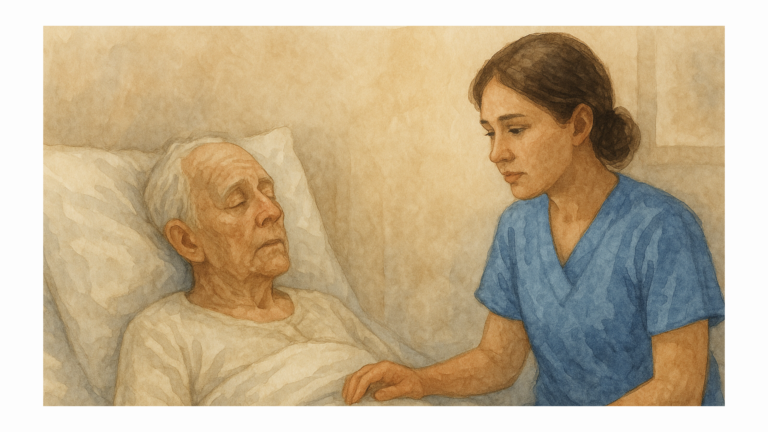
As a hospice nurse, I have witnessed both hospital deaths and peaceful deaths at home. I have stood at bedsides in busy ICUs, and I have sat quietly in living rooms filled with family, faith, and familiar sounds.
The difference is profound.
This article offers an honest, compassionate comparison between dying in the hospital and dying at home so families can understand what each experience is really like and make informed decisions rooted in comfort, dignity, and love.
When treatment is no longer helping, the environment matters more than most families are ever told.
Dying in the Hospital: A Medical Environment, Not a Peaceful One
Hospitals are designed for treatment and rescue. When someone can recover, this environment saves lives. But when death is approaching and treatment is no longer beneficial, the hospital setting often remains intense and medicalized.
Even when families understand their loved one is dying, care frequently continues on autopilot. The room stays bright. The monitors remain on. Interruptions continue. The pace rarely slows.
What families hope for is quiet, comfort, and presence.
What they often experience is a setting that feels overstimulating, impersonal, and emotionally exhausting.
Machines, Alarms, and Constant Noise
Hospitals are loud, even at night.
IV pumps beep. Monitors alarm. Staff speak outside the room. Doors open and close. Overhead announcements continue. Lights stay bright.
For someone who is dying, the body and brain become more sensitive to stimulation. Noise and interruptions that once seemed minor can feel distressing or exhausting.
Dying people do not need constant alerts. They need calm and reassurance. In a hospital, that kind of stillness can be difficult to achieve.
Being Hooked to Machines That No Longer Bring Benefit
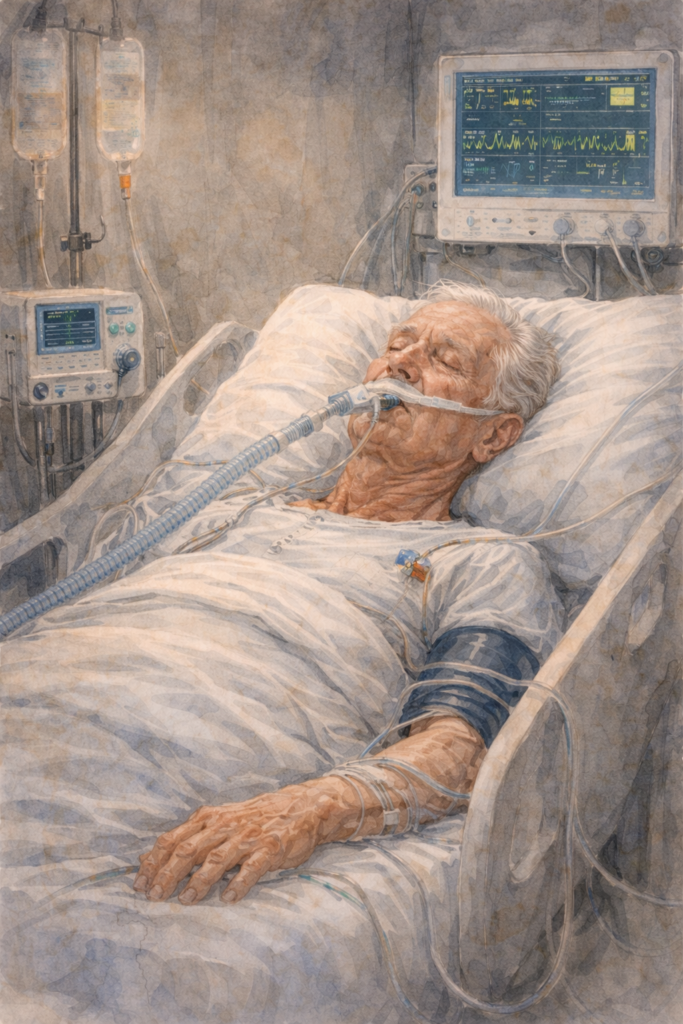
When someone is actively dying, machines rarely add comfort.
Monitors, IV fluids, frequent vital checks, oxygen tubing, and lab draws often remain in place not because they are helping the patient, but because they are part of hospital routine or protocol. Families frequently do not realize they can ask for these interventions to stop.
These measures provide information, not relief. They do not ease pain, restore strength, or change the outcome. What they often do instead is interrupt rest and pull focus away from comfort during the final days.
Many families later say they wish they had known they could say no.
Limited Visiting and Constant Interruptions
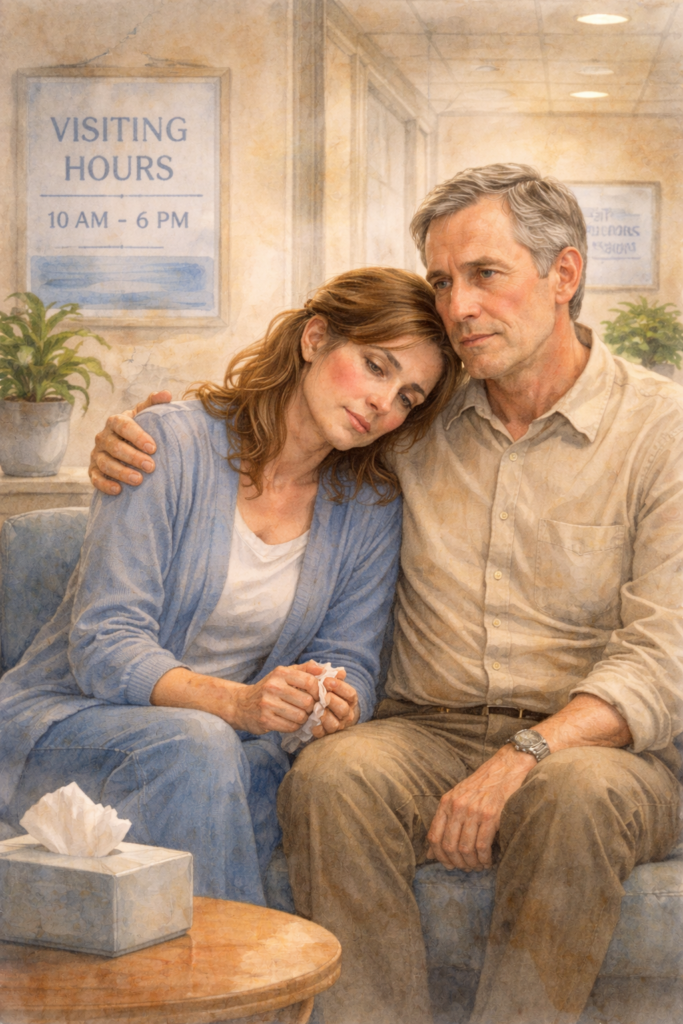
Hospitals often restrict visiting hours, the number of people in the room, and overnight stays. Children and pets are frequently not allowed.
As a result, dying people may spend long periods alone. Loved ones step out to follow rules, rest, or wait for permission to return, never knowing if they will miss an important moment.
Even when visitors are present, the flow of staff continues. Shift changes, rounding teams, housekeeping, vitals, and assessments all create interruptions that break the quiet and make it difficult to simply be together.
A Lack of Privacy and Peace
Many hospital deaths occur behind curtains, in shared rooms, or in small, crowded spaces under harsh lighting. Even private rooms rarely feel protected from interruption.
Families often struggle to find uninterrupted time to sit, pray, speak freely, or hold hands in silence.
It can be hard to create a sacred atmosphere in a space designed for efficiency and medical response.
Dying at Home: Comfort, Peace, Family, and Familiarity
When death is approaching and treatment is no longer helping, the focus can shift.
At home, care centers on comfort rather than monitoring. The pace slows. The noise fades. The environment becomes familiar, personal, and calm.
There are no overhead announcements. No alarms demanding attention. No schedules dictating when people must leave.
Instead, the home becomes a place of presence.
Familiar Surroundings Bring Comfort
At home, people are surrounded not by equipment, but by meaning.
They rest in their own bed or favorite chair, in rooms filled with memories, photographs, and familiar objects. Familiar sights and sounds reduce anxiety and help the body relax.
Comfort creates calm, and calm makes it easier to let go.
No Monitors, No Alarms, No Constant Interruptions
Home hospice removes what no longer serves the dying person.
There are no machines tracking numbers that will not change the outcome. Care focuses on pain relief, ease of breathing, warmth, and emotional and spiritual peace.
The room stays quiet. Lights are softened. Voices lower. Touch replaces technology.
Instead of watching screens, families watch faces. Instead of listening for alarms, they listen to breathing.
Freedom to Be Together
At home, there are no visiting hours.
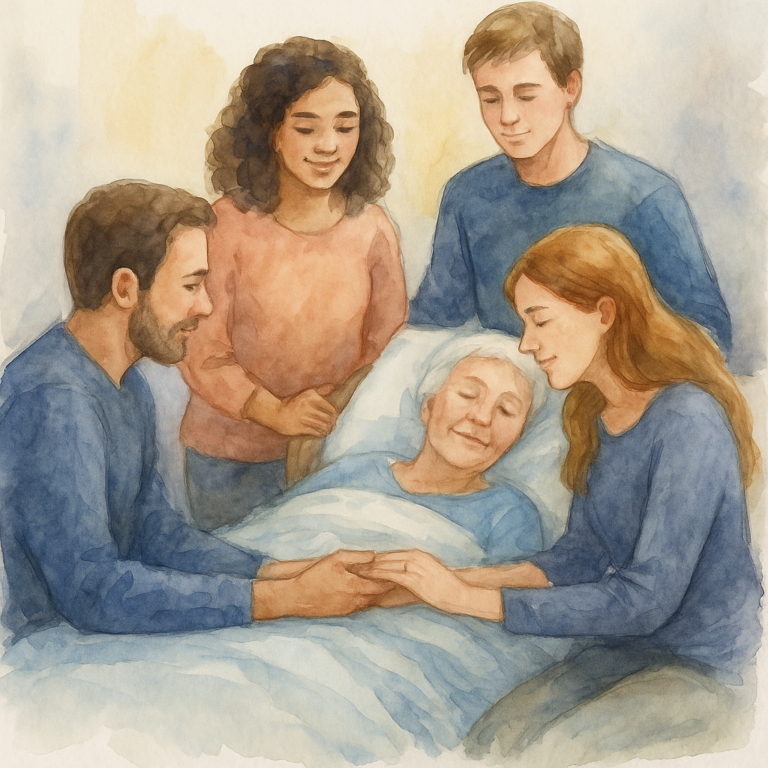
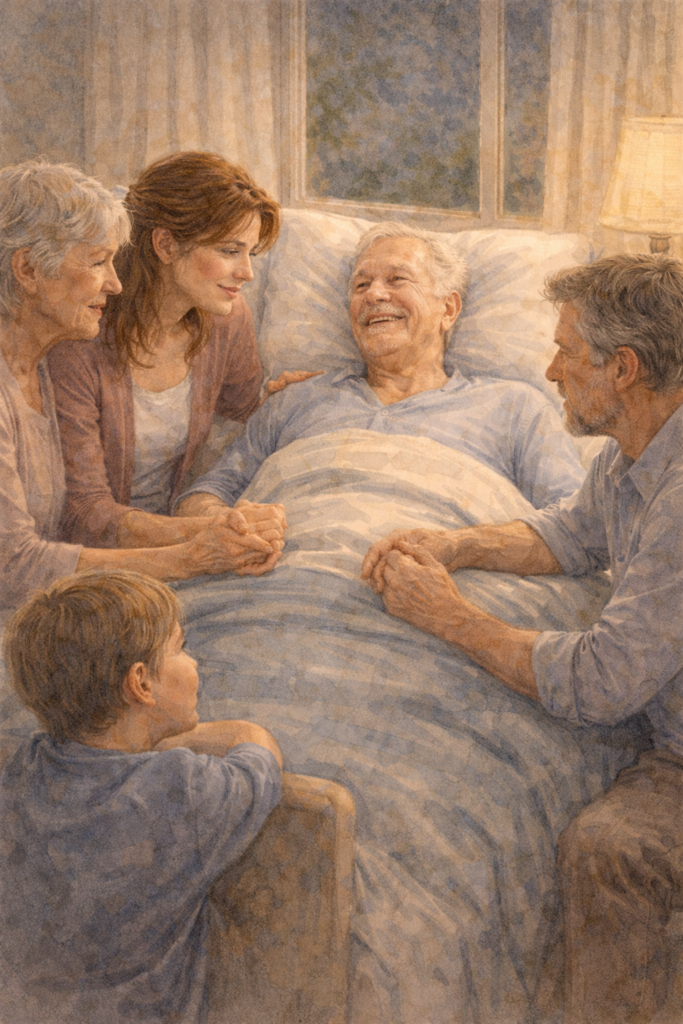
Family and friends come and go naturally. Children and grandchildren are welcome. Loved ones can stay overnight. No one is rushed out of the room.
There is space to talk, cry, laugh, pray, or sit quietly together without interruption.
The final days become about togetherness rather than logistics.
Pets Belong at the Bedside
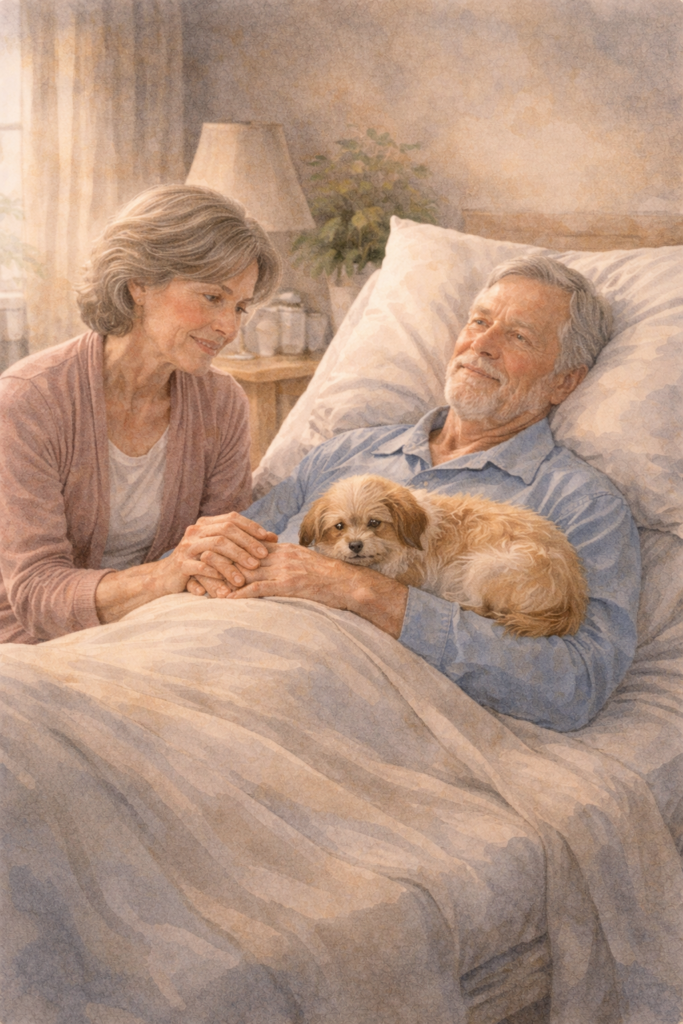
Pets are often a quiet source of comfort at the end of life.
Dogs and cats frequently rest near the bedside, offering calm companionship and a familiar presence. Their steady closeness can be reassuring for both the dying person and the family.
They are not distractions. They are family.
A Space for Faith, Ritual, and Meaning
At home, families are free to shape the atmosphere.
Music can play softly. Scripture can be read. Hands can be held. Candles can be lit. Stories can be shared. Silence can be honored.
The room often feels less like a place where someone is dying and more like a place where love is present.
Many families later describe the experience as peaceful, intimate, and deeply meaningful.
Support Comes to You
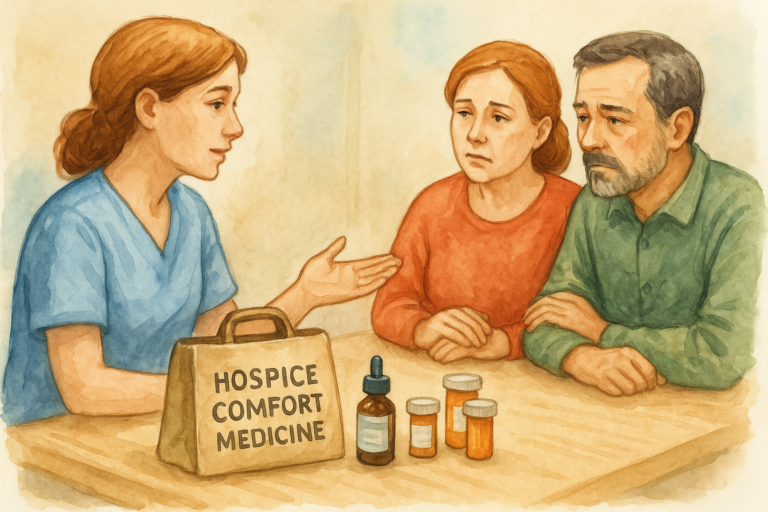
Home hospice provides care in the home, including nursing visits, aides, social workers, chaplains, medications for comfort, equipment, and 24/7 phone support.
Families are not left alone to manage symptoms or make decisions without guidance. When something changes, help is available without rushing to an emergency room or waiting in a clinic.
This support allows families to focus on presence rather than problem-solving.
I have an article here on what Hospice Provides if you would like more information.
A More Natural, Gentle Passing
Without constant procedures or interruptions, the dying process often unfolds more quietly at home.
Breathing changes gradually. Rest periods lengthen. The moment of death arrives without urgency or chaos.
For families, this often feels less frightening and more like a transition than a medical event.
Final Thoughts
Not every family is able to choose a home death. Medical needs, sudden changes, or limited support can make that option impossible.
There is no failure or shame in that.
But when families do have a choice, they deserve to understand what that choice truly involves.
Dying at home is not about giving up or choosing death sooner. It is about choosing the environment in which death unfolds.
Hospitals are built for intervention. Homes are built for connection.
When treatment is no longer helping, peace becomes the priority.
A peaceful death is not a failure of care. It is often the most compassionate form of care there is, and for many families, it becomes one of the most sacred experiences they will ever share. This is what many families mean when they talk about a peaceful death, not the absence of sadness, but the presence of comfort, meaning, and love.

I hope this article brought you some clarity or comfort. Caring for someone at the end of life can feel overwhelming, and you don’t have to figure it all out alone.
If you’re feeling unsure what to do next, my Free Resources page offers simple guides and tools that many families find helpful as they navigate this season. You can also sign up for my once-weekly emails no spam, no pressure. Just gentle support and education.
If you need additional support, or simply need a place to ask a question or vent, you’re welcome to leave a comment or send me an email. You’re not doing this wrong, and you’re not alone.
Frequently Asked Questions
Dying at home is not inherently painful. With hospice care, the focus is on comfort rather than cure. Medications, nursing support, and symptom management are used to control pain, shortness of breath, anxiety, and other distressing symptoms. Many people experience a calmer, more peaceful dying process at home than in a hospital setting.
Yes. Hospice is most commonly provided in the home. Hospice care brings nurses, aides, medications, medical equipment, emotional support, and spiritual care directly to the patient and family. Support is available 24 hours a day by phone, and nurses can come to the home when symptoms change or concerns arise.
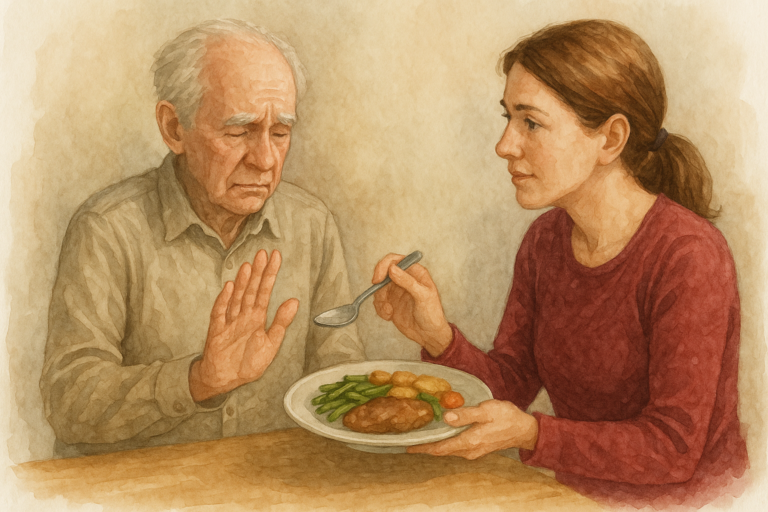
Hospice is appropriate when a person has a serious illness and treatment is no longer helping or desired. Common signs include frequent hospitalizations, declining strength, increased sleep, decreased appetite, and a desire to focus on comfort rather than cure. A physician or hospice provider can help determine eligibility.
Dying in the hospital often involves medical equipment, alarms, frequent interruptions, and limited visiting. Dying at home with hospice focuses on comfort, symptom control, and being surrounded by loved ones in a familiar environment. The emotional experience for families is often very different.